As Dr. John Sanford outlines in this presentation, there are two conflicting worldviews at battle in out culture:
1) we as a species are naturally going up
2) we as a species are naturally going down
The first is the theory of evolution: Mankind is supposed to the end result of a long process of beneficial mutations that changed us, improved us, from our origins as a single cell, simple organism, to become the incredibly complex creatures that we are today. We as a species are improving.
The second is the Biblical worldview. After the Fall into Sin we know that the world was put under a curse. Things started off perfect, but are broken now. We as a species, like all of creation, are breaking down.
So which is it?
Well, what Dr. Sanford explains is that the supposed driver of evolution – mutations – are hurting, not helping us. While an occasional beneficial mutation can happen, Sanford discovered that the rate at which we are mutating, from one generation to the next, is so rapid that we, as a species, are not long for this world. These mutations are accumulating like rust does on a car. Just as a little rust doesn’t harm a vehicle, so too a few mutations won’t harm our genome much. But rust spreading across a car will eventually cause the whole vehicle to fall apart, and in this same way accumulating mutations are eventually going to do Mankind in. Roughly 100 mutations are being passed on per generation – we, as a species are going down. We are slowly rusting out.
To find out more, watch this very intriguing 1 hour presentation. Or you can visit www.logosresearchassociates.org, a site run by Dr. Sanford and a number of other scientists. Who is Dr. Sanford? He is a geneticist, a former professor at Cornell University, and one of the inventors of the gene gun. He was once an atheist and an evolutionist, but after bowing his knee to God he first investigated theistic evolution, then Old Earth Creationism, and finally settled on Young Earth Creationism.
Our universe, if just slightly different, would never have been able to support life. For example, a proton’s mass is 1,837 times greater than that of an electron, but it carries a positive charge that is exactly equal to that of the electron’s negative charge. How very strange that the two, so different in size, would yet be perfectly matched in charge! If they weren’t paired just so, then the vast array of elements could never have formed and life could never have existed.
This is but one example of the fine-tuning that so troubles atheists that they’ve resorted to “what if” stories to explain it away. Yes, they acknowledge, the universe is too finely tuned to have come about just by chance…if we’d had only one role of the dice to get here. But what if this wasn’t the only universe? What if there were billions and trillions and gazillions of universes out there somewhere? What if we could stack the odds in our favor by supposing as many universes as we might need? Then it wouldn’t seem so very improbable that at least one of these might be suited to life…right?
And these same atheists will mock Christians because we speak of faith!
Shot of a solar eclipse blotting out the sun
There is no evidence of these other universes. None at all. So on what basis do they propose this theory? Because they need it to be true. The only case that can be made for it is that the alternative is too terrible for them to consider – that a Fine-Tuner brought the balance, order, and wonder to our universe.
Atheists can be clever, but God won’t leave them with any excuse. As Psalm 19 explains the heavens declare His glory. Want to explain away fine-tuning by postulating a multiverse? Well, then answer this: why would the Sun just happen to be 400 times bigger than our moon and also 400 times further away?
This precise pairing means that the moon and sun appear to be the same size in our sky. This allows us, during a solar eclipse, to study the Sun’s corona in a way that we just can’t any other time and wouldn’t ever be able to if the two celestial bodies weren’t sized just so. As the moon passes in front of the Sun only the corona is still visible – flaring fire crowning the moon in the dark daytime sky. Yes, dear atheist, we are not only in a universe impossibly finely tuned for life, but implausibly suited for us to study our own Sun.
Why would that be?
The multiverse doesn’t explain it. There is no reason that the one universe in which all the dice rolled just right for life would also be the same universe in which we’d be gifted with a moon that was sized exactly right to study our own Sun.
Atheists have no explanation.
But we do. We know our God created us as the very pinnacle of His creation (Psalm 8:3-9, Genesis 1:26-28) and that our purpose is to glorify Him. So it isn’t surprising to us that God would so arrange things that the size of the sizing of the moon enables us to study our Sun – God is showing us His wonders!
This article was first published in the May 2016 edition of Reformed Perspective.
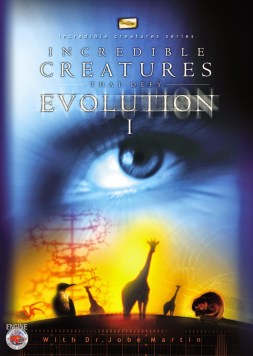
As narrator Dr. Jobe Martin explains to us, he was once an evolutionist. He became a creationist when, as a professor at a dental college, he gave a lecture on the evolution of the tooth – teaching that fish scales eventually migrated into the mouth and became teeth – and was challenged by a couple of his students to investigate creation science. He’d never heard of it, but was willing to take a look. And the closer he looked the more he realized that much of the evolution he believed in was based on assumptions.
His study led him to investigate animals and other creatures, and in this short documentary he shares with us some of the most incredible features of some pretty incredible creatures that forced him to acknowledge that there was a Master Designer behind all this. For example, did you know:
…the bombardier beetle repels attackers by shooting a fiery liquid out of its rear end?
…the giraffe’s heart is strong enough to pump blood all the way up to its head? But what happens when it lowers that head to take a drink? The same strong stream of oxygenated blood will now be traveling with enough pressure to blow out its brain…except for the shut off valves in its neck that kick in when it dips its head.
…the woodpecker has a barbed gluey tongue that sticks to bugs but doesn’t stick to its own beak? And it has a skull that is designed to do the work of a jackhammer without giving the poor fellow a headache.
Dr. Martin shows us why we should be amazed by many other creatures including: the beaver, the Australian incubator bird, the platypus, the chicken egg, the chuckwalla lizard, the gecko, and us humans.
My preschool daughters were amazed, and while this is a video primarily intended for children, my wife and I were also engaged. We were floored by just how creative God is. It is good family viewing, with enough pictures and film footage to keep the attention of the very young, and for parents, a narrative that highlights just God’s sense of fun and genius.
This might not be a good one to hand to any hardened evolution-believing folk you might know. It is just a children’s video – it isn’t meant to offer an overly detailed or complete argument against evolution, and hardened critics will seize on that lack of depth to dismiss it entirely.
So get it for your own family, or your Christian school. And if you know someone dead-set on evolution, then consider Evolution’s Achilles’ Heels and its more adult anti-evolutionary argument. I review it here.
I should add that there are two more films in this series, all of them quite good, and this one the very best of the bunch. You can buy it by clicking here or rent it online by clicking here. And for a four minute peek, check out the trailer below.
Why don’t brilliant scientists see evidence of God’s design in Nature? Because they deliberately blind themselves to this evidence.
by Margaret Helder
The conflict between Biblical revelation and some aspects of modern science is a longstanding issue, and Christian young people can’t avoid being impacted by this dilemma. What should they believe? Should they accept that creation took place in six literal days, or should they seek some sort of accommodation of Scripture with the teachings of science? Many have anguished over this choice.
The appeal of trying to accommodate to the popular scientific view – the appeal of bundling the Bible with the Big Bang – is clear. After all, don’t objective scientists know what they are talking about? So don’t we need to listen to what they are telling us they see?
Christian vs. secular agendas
In this context, what everyone must understand is that there are no objective scientists. Everyone has starting assumptions. The Christian naturally confesses that God exists, that He is omnipotent and omniscient and has communicated with us. Nature is God’s handiwork. Thus the Christian confesses that we see testimony to God’s work and character when we look at nature. For example we read in Psalms 19:1-3:
The heavens declare the glory of God, and the sky above proclaims his handiwork. Day to day pours out speech and night to night reveals knowledge. There is no speech, nor are there words, whose voice is not heard.
Another famous passage about the testimony of nature is Job 12:7-9:
But ask the beasts, and they will teach you, and the birds of the heavens, and they will tell you, or the bushes of the earth, and they will teach you, and the fish of the sea will declare to you. Who among all these does not know that the hand of the Lord has done this?
When we study biology, we see that God is the creator!
The secular position contrasts sharply with the Christian view. Mainstream scientists maintain that natural explanations can be found for everything. No supernatural input will ever be evident. For example, an editorial in the journal Nature (March 12, 1981) remarked concerning the definition of science: “…one prejudice is allowable, even necessary – the preconception that theories can be constructed to account for all observable phenomena.” Thus the Christian expects to see God revealed in nature, while the secular person says God will never be revealed in nature.
Different expectations prompt different questions
With different expectations come different questions – there is a big difference between what secular scientists and what some Christians will ask about natural systems. And their different questions will result in very different answers obtained.
How does a square melon get square? Newly sprouted watermelons are placed in plastic boxes, and as the melon grows it fill in the available space until this unique shape results.
For example, suppose somebody showed you a photograph of three unfamiliar objects, green in color and square in shape. If you were to ask that person “How did Nature form that?” the only possible response would be some sort of process. However, if you were instead to ask, “Did Nature form that?” then the person has the opportunity to investigate whether or not these square watermelons (which is what the objects turn out to be) had a simply natural origin. Only then could they discover that no, they did not.
Similarly, if a scientist asks, “How did life come about spontaneously?” then the only possible answer is a process. If the same scientist were to ask “Could life come about spontaneously?” in this case he has the opportunity to examine what cells are like and what the biochemical processes in cells are like, and thereafter conclude that life could not have come about spontaneously. Thus the answers obtained from the study of nature depend upon what questions are asked.
No results
There is no issue that more clearly demonstrates the impact of what questions are asked of nature, than the discipline of origin of life studies. Specialist John H. McClendon’s summary of the situation was as follows: “Since we know that life did arise, we are obligated to find mechanisms to accumulate enough organic matter to start life.” Scientists may feel themselves obligated to find such a scenario, but they are having a difficult time finding one nonetheless.
The difficulties of proposing and defending a reasonable scenario for the origin of life were further highlighted by Simon Conway Morris in 2003 in a chapter entitled “The Origin of Life: straining the soup of our credulity” from his book entitled Life’s Solution. Of these chemists who are not discouraged by the results of their experiments, he remarks:
…chemists have devised reaction pathways that can produce reasonable quantities of ribose [needed for one popular scenario], but the sheer complexity of the process and the careful manipulation of the many steps during the reaction make one wonder about its applicability to the origin of life.
Dr. Morris is telling us that the kind of chemical reactions that require fancy manipulation by a chemist do not occur spontaneously in nature (apart from in living cells).
Scientists were still looking for support for the “RNA world” in 2014 when the following description of a possible process was printed in Nature:
After ten rounds of selection and amplification of catalytic molecules; pruning of superfluous sequences; insertion of another randomized segment to create a new pool; and then another six rounds of selection and amplification, a D-ribozyme was isolated that could perform template-directed joining of L-substrates about a million times faster than the uncatalyzed reaction.
One would have to be very gullible indeed to believe that any of this could happen spontaneously. Indeed the article referred to the process as “engineering” which presupposed that an intelligent agent (the chemist) carried out the process.
An article in Nature five years previously had similarly highlighted the difficulties of the RNA world hypothesis, the most popular explanation today for how life could have originated in spontaneous fashion. Matthew W. Powner et al declared:
At some stage in the origin of life, an informational polymer must have arisen by purely chemical means. According to one version of the “RNA world” hypothesis this polymer was RNA, but attempts to provide experimental support for this have failed (italics mine).
The determination of the mainstream scientists to keep looking for a spontaneous solution to the origin of life, even when the results are totally contrary, has long been recognized. But they do not see this situation as a problem. Thus David Deamer remarked in a book review on origin of life theories:
[Author] Harold argues that, notwithstanding the vast literature, progress has gone little beyond the findings of Soviet biochemist Alexander Oparin and British polymath J. B. S. Haldane more than 80 years ago, when they independently argued that Louis Pasteur’s dictum “All life from life” was wrong.
Note that the “findings” of Oparin and Haldane that Pasteur was wrong, were not based on any evidence, (they still aren’t), but on a choice to believe that life can come from non-living chemicals.
Their bias blinds
The secular scientist approaches the study of nature with a specific agenda. Nature is to be interpreted only in terms of matter, energy, and natural processes, even if the results look ridiculous. A prominent geneticist, Richard Lewontin (b. 1929) actually stated this very clearly. In a famous review of a book by Carl Sagan, he wrote:
Our willingness to accept scientific claims that are against common sense is the key to an understanding of the real struggle between science and the supernatural. We take the side of science…. because we have an a priori commitment to materialism. It is not that the methods and institutions of science somehow compel us to accept a material explanation of the phenomenal world, but, on the contrary, that we are forced by our a priori adherence to material causes to create an apparatus of investigation and a set of concepts that produce material explanations, no matter how counter-intuitive, no matter how mystifying to the uninitiated. Moreover, that materialism is absolute, for we cannot allow a Divine Foot in the door.
What Dr. Lewontin said, was that scientists bias their studies so that only natural explanations will ever be obtained. Similarly astronomer Robert Jastrow (1925-2008) equated such an approach as almost a religion for scientists:
Scientists…. believe that every event that takes place in the world can be explained in a rational way as a consequence of some previous event. If there is a religion in science, this statement can be regarded as its main article of faith…
Nothing to do with the truth
It is certainly reasonable to ask how legitimate it is to restrict science to only naturalistic hypotheses. The answer you’ll get to that question depends upon whom you ask. Biologist Leonard Brand (b. 1941) replies that such restrictions are not legitimate.
Our research only answers the questions we are willing to ask, naturalism allows only certain questions to be asked… Naturalism has a powerful biasing influence in science, in steering scientific thinking, and, in many cases, deciding what conclusions are to be reached.
Others point out that secular scientists may restrict what explanations about nature qualify for the term “science” but they cannot at the same time claim, that what they are dealing with is truth. For example, philosophers of science Stephen C. Meyer (b. 1958) and Paul A. Nelson (b. 1958) point out:
Restricting science to naturalistic hypotheses is not an innocuous methodological stratagem [innocent technique] which nevertheless leaves science free to pursue the truth. God, after all, may not have been away on other business when life originated, or humankind came to be.
These men declare that the secular assumption that God did not intervene directly in nature does not make it so. Similarly Calvin College (in Michigan) philosopher of science Del Ratzsch points out that:
If nature is not a closed, naturalistic system – that is, if reality does not respect the naturalists’ edict – then science built around that edict cannot be credited a priori with getting at truth, being self-corrective or anything of the sort.
What Dr. Ratzsch has pointed out is that wrong questions will always elicit wrong answers. Scientific explanations may change (and indeed they do) but the answers will never be any closer to the truth if the wrong questions are being asked in the first place. It is often said that science is “self-corrective” i.e. that errors are exposed and better explanations developed. However the term “self-corrective” is meaningless when the studies are biased from the beginning.
Conclusion
Secular scientists, with their expectations of never seeing God in nature, have confined themselves to mechanistic explanations and interpretations. Such, of course, is the theory of evolution. As Dr. Ratzsch remarks: “… materialists have no viable choice but to view the world through evolutionary spectacles of some sort.” Similarly Dr. Brand tells us: “The evolutionary theory is based on the philosophy of naturalism, and does not consider any hypotheses that involve divine intervention in the history of the universe.”
Influenced by their secular colleagues, many Christians choose a theistic evolution type of explanation for origins. For example, Clarence Menninga (b. 1928, science professor emeritus at Calvin College), wrote in The Banner:
But it is presumptuous and arrogant for us to restrict God’s options by claiming that he could not have used natural processes to bring about certain complex structures and functions, even if we do not understand in scientific terms how that was done.
Thus Dr. Menninga explains the appearance of living creatures in terms of an evolutionary process. He assumes that this is so, contrary to what the Bible says, even though he is unaware of a scientific explanation for the process.
It is evident that if such scientists were to ask different questions, based on the expectation of seeing God’s work and character revealed in nature, they might not necessarily come to any evolutionary conclusions at all. In addition, the concept of long ages is a necessary ingredient in any evolutionary scenario. If there were no process of gradual change (evolution), if organisms were created directly, then there is no need for a long period of past time other than the few thousands of years for which we have historical records.
This is an extract from Margaret Helder’s upcoming book, and was originally published in www.ReformedPerspective.ca and is reprinted here with Dr. Helder’s permission.
Buddy Davis is a musician, dinosaur sculptor, and children’s entertainer. In this children’s video Buddy invites along to go on a dinosaur bone dig to see how paleontologists find them and take them out of the ground, and then put them on display.
Davis really knows his stuff. Dinosaurs have long been promotional tools for evolutionists, but Davis will have none of that. He approaches the topic of dinosaur and their fossils from a thoroughly Christian, creationists perspective. In a number of instances he contrasts the biblical position with the evolutionary one. So, for example, he explains that fossilization doesn’t need to take millions of years – as he explains, they’ve even found fossilized teddy bears! And kids are also told about how elastic blood vessels have recently been found in dinosaur bones that shows they couldn’t possibly be millions of years old. These animals aren’t as old as they have been made out to be!
Our host is enthusiastic and energetic and keeps things hopping without it getting frantic. While I enjoyed this, I’d recommend it more as a kid’s video than family viewing. I mean, parents won’t be bored, but they likely won’t want to watch this as many times as their children!

 Documentary


 Creation Without Compromise