Wrong questions lead to the wrong answers

question web

Why don’t brilliant scientists see evidence of God’s design in Nature?
Because they deliberately blind themselves to this evidence.

by Margaret Helder

The conflict between Biblical revelation and some aspects of modern science is a longstanding issue, and Christian young people can’t avoid being impacted by this dilemma. What should they believe? Should they accept that creation took place in six literal days, or should they seek some sort of accommodation of Scripture with the teachings of science? Many have anguished over this choice.

The appeal of trying to accommodate to the popular scientific view – the appeal of bundling the Bible with the Big Bang – is clear. After all, don’t objective scientists know what they are talking about? So don’t we need to listen to what they are telling us they see?

Christian vs. secular agendas

In this context, what everyone must understand is that there are no objective scientists. Everyone has starting assumptions. The Christian naturally confesses that God exists, that He is omnipotent and omniscient and has communicated with us. Nature is God’s handiwork. Thus the Christian confesses that we see testimony to God’s work and character when we look at nature. For example we read in Psalms 19:1-3:

The heavens declare the glory of God, and the sky above proclaims his handiwork. Day to day pours out speech and night to night reveals knowledge. There is no speech, nor are there words, whose voice is not heard.

Another famous passage about the testimony of nature is Job 12:7-9:

But ask the beasts, and they will teach you, and the birds of the heavens, and they will tell you, or the bushes of the earth, and they will teach you, and the fish of the sea will declare to you. Who among all these does not know that the hand of the Lord has done this?

When we study biology, we see that God is the creator!

The secular position contrasts sharply with the Christian view. Mainstream scientists maintain that natural explanations can be found for everything. No supernatural input will ever be evident. For example, an editorial in the journal Nature (March 12, 1981) remarked concerning the definition of science: “…one prejudice is allowable, even necessary – the preconception that theories can be constructed to account for all observable phenomena.” Thus the Christian expects to see God revealed in nature, while the secular person says God will never be revealed in nature.

Different expectations prompt different questions

With different expectations come different questions – there is a big difference between what secular scientists and what some Christians will ask about natural systems. And their different questions will result in very different answers obtained.

Square watermelons - web
How does a square melon get square? Newly sprouted watermelons are placed in plastic boxes, and as the melon grows it fill in the available space until this unique shape results.

For example, suppose somebody showed you a photograph of three unfamiliar objects, green in color and square in shape. If you were to ask that person “How did Nature form that?” the only possible response would be some sort of process. However, if you were instead to ask, “Did Nature form that?” then the person has the opportunity to investigate whether or not these square watermelons (which is what the objects turn out to be) had a simply natural origin. Only then could they discover that no, they did not.

Similarly, if a scientist asks, “How did life come about spontaneously?” then the only possible answer is a process. If the same scientist were to ask “Could life come about spontaneously?” in this case he has the opportunity to examine what cells are like and what the biochemical processes in cells are like, and thereafter conclude that life could not have come about spontaneously. Thus the answers obtained from the study of nature depend upon what questions are asked.

No results

There is no issue that more clearly demonstrates the impact of what questions are asked of nature, than the discipline of origin of life studies. Specialist John H. McClendon’s summary of the situation was as follows: “Since we know that life did arise, we are obligated to find mechanisms to accumulate enough organic matter to start life.” Scientists may feel themselves obligated to find such a scenario, but they are having a difficult time finding one nonetheless.

The difficulties of proposing and defending a reasonable scenario for the origin of life were further highlighted by Simon Conway Morris in 2003 in a chapter entitled “The Origin of Life: straining the soup of our credulity” from his book entitled Life’s Solution. Of these chemists who are not discouraged by the results of their experiments, he remarks:

…chemists have devised reaction pathways that can produce reasonable quantities of ribose [needed for one popular scenario], but the sheer complexity of the process and the careful manipulation of the many steps during the reaction make one wonder about its applicability to the origin of life.

Dr. Morris is telling us that the kind of chemical reactions that require fancy manipulation by a chemist do not occur spontaneously in nature (apart from in living cells).

Scientists were still looking for support for the “RNA world” in 2014 when the following description of a possible process was printed in Nature:

After ten rounds of selection and amplification of catalytic molecules; pruning of superfluous sequences; insertion of another randomized segment to create a new pool; and then another six rounds of selection and amplification, a D-ribozyme was isolated that could perform template-directed joining of L-substrates about a million times faster than the uncatalyzed reaction.

One would have to be very gullible indeed to believe that any of this could happen spontaneously. Indeed the article referred to the process as “engineering” which presupposed that an intelligent agent (the chemist) carried out the process.

An article in Nature five years previously had similarly highlighted the difficulties of the RNA world hypothesis, the most popular explanation today for how life could have originated in spontaneous fashion. Matthew W. Powner et al declared:

At some stage in the origin of life, an informational polymer must have arisen by purely chemical means. According to one version of the “RNA world” hypothesis this polymer was RNA, but attempts to provide experimental support for this have failed (italics mine).

The determination of the mainstream scientists to keep looking for a spontaneous solution to the origin of life, even when the results are totally contrary, has long been recognized. But they do not see this situation as a problem. Thus David Deamer remarked in a book review on origin of life theories:

[Author] Harold argues that, notwithstanding the vast literature, progress has gone little beyond the findings of Soviet biochemist Alexander Oparin and British polymath J. B. S. Haldane more than 80 years ago, when they independently argued that Louis Pasteur’s dictum “All life from life” was wrong.

Note that the “findings” of Oparin and Haldane that Pasteur was wrong, were not based on any evidence, (they still aren’t), but on a choice to believe that life can come from non-living chemicals.

Their bias blinds

The secular scientist approaches the study of nature with a specific agenda. Nature is to be interpreted only in terms of matter, energy, and natural processes, even if the results look ridiculous. A prominent geneticist, Richard Lewontin (b. 1929) actually stated this very clearly. In a famous review of a book by Carl Sagan, he wrote:

Our willingness to accept scientific claims that are against common sense is the key to an understanding of the real struggle between science and the supernatural. We take the side of science…. because we have an a priori commitment to materialism. It is not that the methods and institutions of science somehow compel us to accept a material explanation of the phenomenal world, but, on the contrary, that we are forced by our a priori adherence to material causes to create an apparatus of investigation and a set of concepts that produce material explanations, no matter how counter-intuitive, no matter how mystifying to the uninitiated. Moreover, that materialism is absolute, for we cannot allow a Divine Foot in the door.

What Dr. Lewontin said, was that scientists bias their studies so that only natural explanations will ever be obtained. Similarly astronomer Robert Jastrow (1925-2008) equated such an approach as almost a religion for scientists:

Scientists…. believe that every event that takes place in the world can be explained in a rational way as a consequence of some previous event. If there is a religion in science, this statement can be regarded as its main article of faith…

Nothing to do with the truth

It is certainly reasonable to ask how legitimate it is to restrict science to only naturalistic hypotheses. The answer you’ll get to that question depends upon whom you ask. Biologist Leonard Brand (b. 1941) replies that such restrictions are not legitimate.

Our research only answers the questions we are willing to ask, naturalism allows only certain questions to be asked… Naturalism has a powerful biasing influence in science, in steering scientific thinking, and, in many cases, deciding what conclusions are to be reached.

Others point out that secular scientists may restrict what explanations about nature qualify for the term “science” but they cannot at the same time claim, that what they are dealing with is truth. For example, philosophers of science Stephen C. Meyer (b. 1958) and Paul A. Nelson (b. 1958) point out:

Restricting science to naturalistic hypotheses is not an innocuous methodological stratagem [innocent technique] which nevertheless leaves science free to pursue the truth. God, after all, may not have been away on other business when life originated, or humankind came to be.

These men declare that the secular assumption that God did not intervene directly in nature does not make it so. Similarly Calvin College (in Michigan) philosopher of science Del Ratzsch points out that:

If nature is not a closed, naturalistic system – that is, if reality does not respect the naturalists’ edict – then science built around that edict cannot be credited a priori with getting at truth, being self-corrective or anything of the sort.

What Dr. Ratzsch has pointed out is that wrong questions will always elicit wrong answers. Scientific explanations may change (and indeed they do) but the answers will never be any closer to the truth if the wrong questions are being asked in the first place. It is often said that science is “self-corrective” i.e. that errors are exposed and better explanations developed. However the term “self-corrective” is meaningless when the studies are biased from the beginning.

Conclusion

Secular scientists, with their expectations of never seeing God in nature, have confined themselves to mechanistic explanations and interpretations. Such, of course, is the theory of evolution. As Dr. Ratzsch remarks: “… materialists have no viable choice but to view the world through evolutionary spectacles of some sort.” Similarly Dr. Brand tells us: “The evolutionary theory is based on the philosophy of naturalism, and does not consider any hypotheses that involve divine intervention in the history of the universe.”

Influenced by their secular colleagues, many Christians choose a theistic evolution type of explanation for origins. For example, Clarence Menninga (b. 1928, science professor emeritus at Calvin College), wrote in The Banner:

But it is presumptuous and arrogant for us to restrict God’s options by claiming that he could not have used natural processes to bring about certain complex structures and functions, even if we do not understand in scientific terms how that was done.

Thus Dr. Menninga explains the appearance of living creatures in terms of an evolutionary process. He assumes that this is so, contrary to what the Bible says, even though he is unaware of a scientific explanation for the process.

It is evident that if such scientists were to ask different questions, based on the expectation of seeing God’s work and character revealed in nature, they might not necessarily come to any evolutionary conclusions at all. In addition, the concept of long ages is a necessary ingredient in any evolutionary scenario. If there were no process of gradual change (evolution), if organisms were created directly, then there is no need for a long period of past time other than the few thousands of years for which we have historical records.

This is an extract from Margaret Helder’s upcoming book, and was originally published in www.ReformedPerspective.ca and is reprinted here with Dr. Helder’s permission.
Follow the Evidence?

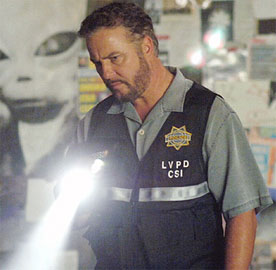
gil-gThere was a refrain frequently heard on early episodes of TV’s CSI: Crime Scene Investigation. Gil Grissom was training rookie crime scene investigators, sharing with them his many years of experience in the field. Grissom would often say, “Follow the evidence…” The understanding was that just following the evidence would lead to the perpetrator of the crime. Following the evidence would lead to the truth.

In the world of TV crime scene investigation, this might usually work as a sound philosophy. Even there, occasionally writers and producers have explored the possibility that the evidence can be tainted by factors related to those investigating it. The evidence is not always interpreted objectively and thus conclusions (right or wrong) can still ultimately be reached on the basis of prejudice or gut feeling. The philosophy sounds good in principle, but it doesn’t always work out in practice.

Moving into the real world, the principle of “follow the evidence” is the basic philosophy behind much of Christian apologetics today. Walk into a vanilla Christian bookstore these days and if they have an apologetics section, likely everything there will be based on this principle. Lee Strobel is popular with his The Case for a Creator, The Case for Faith, and The Case for Christ. I won’t discount everything he writes in these books, but it should be noted that his basic principle is the same as CSI Grissom: follow the evidence. The same is true for the majority of others writing on the subject of apologetics today. For that reason alone, this principle needs critical evaluation.

Yet there is another reason why we should pause for careful reflection. We’re in the throes of debate on the compatibility of Christianity and evolution.  We ought not to kid ourselves, these issues are not going away. If the historical experience of the Christian Reformed Church is any indication, we should expect proponents of theistic evolution to keep trying until they not only make room for their position, but also gain converts to the point of having their position as the dominant one.

In this discussion, the allegation has been made that young university students have been sent into turmoil when encountering the evidence for evolution. As the story has it, these students were taught creation science at home, church, and school. They were told that the evidence made it clear that God had created the world ex nihilo (out of nothing) in six ordinary days some thousands of years ago, not millions or billions. Arriving at university, they encounter a different batch of evidences not previously considered. This sends their faith into a tailspin and, so the story goes, some of them even end up committing suicide.

On a superficial level, we can join in bemoaning this approach to such issues. Here is some common ground with those attempting to make room for theistic evolution in our churches. We can agree that something has gone awry with those young university students, though we would still likely disagree on the details. From their perspective, the problem rests with creation science which produces faulty evidence because of certain faith convictions regarding creation. From our perspective, staking your faith on extra-biblical evidences is always problematic. Let me explain why.

The Theological Background of Evidential Apologetics    

Evidential apologetics is a philosophy of defending the faith which rests upon the use of evidence. This system of apologetics is usually traced back to Joseph Butler (1692-1752), an Anglican bishop. Butler lived during the time of the Enlightenment, also known as “The Age of Reason.” Serious challenges were being posed against the Christian faith. Rationalism, the belief that reason could provide the basis of all knowledge, had infiltrated not only society, but also many churches. The Enlightenment was a weak period for theology, and Reformed theology was also affected (or better: infected).

Butler recognized that Enlightenment philosophy endangered the Christian faith. In particular, he saw the danger deism posed. Deism is the belief that God is a clockmaker. He created the universe and then wound it up like a clock. He removed himself from it and is no longer intimately involved with it. According to deism, God takes an arms-length approach to the world. Butler rightly saw that this philosophy was in conflict with the teachings of the Bible.

In 1736, Butler published a book entitled The Analogy of Religion. This work was a response to deism. It was a defense of the faith. Butler aimed to show there are no sound objections to the Christian religion. He said all the evidence, especially the evidence in the natural world, points to the very probable truth of Christianity. As long as a person doesn’t ignore the abundance of evidence, he or she should not reject the Bible or any of its teachings. Unprejudiced minds, said Butler, would see the design inherent in the world and almost inevitably reach the conclusion that there is a Creator. A fair evaluation of the external evidence would likely push the open-minded unbeliever to accept the Bible. Butler purposed to demonstrate the truth of the Bible through facts, evidence and logic – and he believed it was not only possible to do this, but also pleasing to God.

When evaluating Butler’s approach, we have to remember the importance of what we call presuppositions. These are our most non-negotiable beliefs or assumptions about the way the world really is. Butler was an Arminian and one of his presuppositions was that man had not fallen so far as to completely corrupt his thinking. He did not confess the doctrine of pervasive (or total) depravity found in the Canons of Dort, but repudiated it. This had consequences for his system of apologetics. So did another related presupposition: the freedom of the will of fallen man. According to Butler and other Arminians, fallen man retains free will to choose for or against God. He need only use his faculties rightly in order to make the right choice.

While Butler saw the dangers of the Enlightenment and wanted to combat deism in particular, the weapons of his warfare were earthly and unscriptural. We might wish that Butler was a mere footnote in the history of Christian apologetics, but unfortunately his approach became widely accepted. Much of what we see today in non-Reformed (“evangelical”) apologetics finds its historical roots in the Arminian apologetics of this Anglican.

Evidential apologetics, historically and in its modern form, makes its case based not only on the evidence (and the nature of evidence), but also on a certain understanding of human nature. According to this system, human nature is not pervasively depraved. The human intellect is not fallen or dead in sin, only weakened or sick. Neutrality is not only possible, but a reality. When confronted with the evidence, and with perhaps a little help from God, the unprejudiced man will recognize the truth and turn to the Bible and believe it. This is Arminian theology applied to apologetics.

Unfortunately, this system has been appropriated by many involved with creation science. Many creation scientists have been Arminian in their theological convictions, so this should not come as a surprise. It is only consistent for Arminians to adopt evidential apologetics, whether in general, or whether specially applied to the question of origins. Inconsistency emerges when Reformed believers adopt this approach. “Following the evidence” is not our way.

A Biblical Approach

When we approach the question of evidence, we need to do so with Reformed, which is to say biblical, presuppositions. There are several of them we could discuss. However, in the interests of time and space, let me restrict our discussion to two of the most important. These are the presuppositions — the non-negotiable beliefs that will govern how we consider the place and use of evidence in apologetics.

The first is our confession regarding the nature of fallen man. As Ephesians 2:1 puts it, the unregenerate person is dead in transgressions and sins. This spiritual death extends to all the parts of a fallen human being: heart, mind, and will are all without a sign of life. When it comes to the Christian faith, fallen man does not have the capacity to interpret the evidence rightly. What the fallen man needs is regeneration. He needs to be made alive by the Holy Spirit. The Holy Spirit needs to open his eyes so that he may see, understand, and believe. The Holy Spirit does this work of regeneration through the Word of God. Therefore, the Word of God, not external evidences, needs to be the focus of our apologetical efforts. From a Reformed perspective, apologetics involves bringing the Word of God to bear on unbelief to expose its futility and to vindicate and commend the Christian worldview.

A second necessary presupposition builds on that. We always start with a belief that the Bible is God’s inspired, infallible, and inerrant Word. Those doctrinal positions are not conclusions that we reach through reasoning and proofs. They are held in faith. We hold to what is called the self-attesting authority of Scripture. That means the Bible attests or confirms its own authority. It does not need to be proven. The Bible claims to be the Word of God and we receive it as such. This is a settled truth for Christians. Therefore, the Bible is the basis and standard for all our apologetics. We are defending the Bible and the biblical worldview, but the Bible is also the guide for how we defend the Bible. The Bible gives us the means and strategies to use in defending the Bible.

Where does that leave external evidences? Well, for one thing, we do not build our system of apologetics upon them. Instead, our system has to be grounded on the Word of God. The Word is the supreme authority, not outside evidence. The Holy Spirit does not promise to regenerate people through external evidences. He does promise to do that through the Scriptures, though it is not inevitable in every case, obviously. What’s more, because evidence is always interpreted evidence, and the interpretation is always done by sinful minds, evidence must always be evaluated according to the supreme standard of the Word of God. Since there are no neutral facts or neutral methods for considering the facts, the Word must always be recognized as standing over the facts. It must be the grid through which the “facts” are sifted.

There is a place for evidence in apologetics and in the debate about origins. Evidence from outside the Bible can corroborate the Bible’s teachings. However, it is not the starting place, nor is it the authority. Moreover, external evidences can be fickle. What was thought to be evidence in one generation can turn out to have been misinterpreted by the next. How do you stay off what one writer called “the evidentialist roller coaster”? How do you stand firm against humanists and theistic evolutionist compromisers? Not by retreating to evidence, but by standing firm on what the Word of God teaches. And by evaluating all evidence in the light of the Word of God. That also means being open to the possibility that external evidences, whether for or against biblical teaching, may be wrongly interpreted. When it comes to evidences, one should retain a level of skepticism. After all, creation scientists and humanists/theistic evolutionists are all human beings, prone to sin and to mistakes. The only firm foundation is the Word of God.

Conclusion

“Follow the evidence” might be acceptable for fictional TV characters, but in God’s world his children can’t accept this procedure when it comes to apologetics. To “follow the evidence,” as if we are all neutral observers of the world is to sell out on our fundamental presuppositions. It’s regrettable that the surge of interest in apologetics has led some in our Reformed community to dabble with evidentialist apologetics. It’s sad too that we have often imbibed these apologetics as mediated to us through some creation scientists and their organizations.

Thankfully, in the last number of years, some creation scientists have adopted a Reformed, presuppositional approach to the question of origins. Most notable are Dr. Jonathan Sarfati and Dr. Jason Lisle, both affiliated with Answers in Genesis. Some time ago I reviewed Lisle’s book, The Ultimate Proof: Resolving the Origins Debate, and I want to take this opportunity to again commend it to you as a good example of how to apply Reformed apologetics to this issue. Some of Lisle’s final words in The Ultimate Proof provide a suitable conclusion: “Our defense of the faith comes from learning to think and to argue in a biblical way. God is logical, and we should be too. God tells us that all knowledge is in him (Col. 2:2-3), so we should train ourselves to recognize this fact” (173).


An earlier version of this article was originally published in Reformed Perspective magazine.  It appears here with their gracious permission.

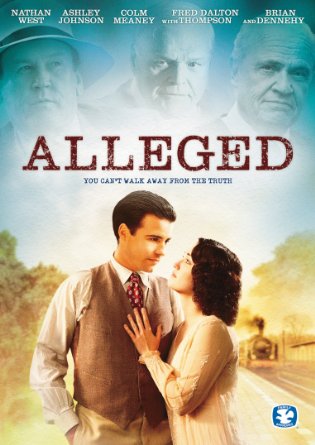
Movie Review: A courtroom drama, a romance, and a battle over creation vs. evolution

ALLEGEDAlleged
Drama / Romance
93 minutes; 2011
Rating: 8 / 10

Dayton, Tennessee is a small town in 1925, and too small for local reporter Charles Anderson who wants to make a big name for himself by going to the big city and working for legendary Baltimore Sun editor H.L. Mencken. His fiancee and coworker Rose is rooting for him, and when a legal battle in the town’s courtroom garners attention from the national media, it looks like Charlie may have just the news story he needs to grab Mencken’s attention.

Only, things don’t go quite how he was expecting. He does get Mencken’s attention, who is even willing to teach Charlie how to craft a news story. But this close-up tutelage lets Charlie see that his mentor won’t let a little something like the truth get in the way of a good story. Mencken is more than willing to make up a story if it will sell papers. Is Charlie willing to go that far to land the job he’s been dreaming of?

Setting

Though Charlie Anderson is fictional, the story’s setting is true. In 1925 an anti-evolution law that forbade the teaching of evolution in public schools was challenged in a Dayton, Tennessee courtroom. John Scopes, a high school teacher, was charged with violating the law by teaching his students about Charles Darwin’s theory.

The “Scopes Monkey Trial” pitted creationists vs. evolutionists and enlisted big name “stars”: the Scripture-quoting, Bible-believing, 3-time presidential candidate William Jennings Bryan for the prosecution; and for the defense, Clarence Darrow, infamous for his defense of two indefensible child-killing clients. These big names got the attention of one other: Baltimore Sun editor H. L. Mencken. His columns largely influenced how the trial was perceived by the public – while the creationists won the court case, Mencken made sure that the evolutionists won the publicity battle.

Cautions

The film is excellent, with only a few cautions to consider.

First, Charlie is drunk as a skunk in one scene, though his fiancee’s disappointment and disapproval makes this an object lesson in the idiocy of drinking to excess, so there’s not too much to object to on that point.

Also one character shouts “Hallelujah!” insincerely in a church service.

I should add, because the film teaches about the implication of Darwinian thought, there is a subplot that deals with eugenics. This is a topic that our older children need to learn about, but is also too much information for a younger audience that doesn’t yet need to know how horrible the world can be.

Conclusion

This isn’t the first film to depict the Scopes Monkey Trial. Three decades later the events of the trial were again fictionalized as a play (1955) which was then adapted to film as Inherit the Wind (1960). Both the play and the film presented creationists as ignorant, foolish, bigoted and even bloodthirsty (Inherit the Wind has the townspeople threatening to burn John Scopes!) and because the film was shown to generations of American public school children it has had a lasting impact on the way the creation/evolution debate is conducted. It can be given much of the credit for why creationist arguments are assumed to be ignorant and more often mocked than answered.

Alleged is an enjoyable counter to Inherit the Wind, presenting a much more accurate account of the trial. It could be enjoyed as an above average Christian romance, but the setting makes this more than a fun little film. The historical importance of this event means this is a film for just about anyone. It is educational and informative, yes, but also fun, romantic, generally light, and quite well acted. Highly recommend for older teens and adults it is available at Amazon.ca. This review was first published on www.ReelConservative.com.