A Dangerous Direction

BeekeA few months ago, we included a review of a book edited by Richard D. Phillips, God, Adam, and YouYou can find Dr. Van Raalte’s review here.  I’ve had the book for a while, but have only just begun reading it myself.  So far, it definitely lives to up to what was said in the review.

I’d like to share an excerpt from chapter 2, “The Case For Adam.”  Dr. Joel Beeke presents ten persuasive historical and theological arguments in favour of the orthodox view of Adam.  His final theological argument is that “the historical Adam is a test case for biblical authority.”  He specifically critiques scholars like Peter Enns who argue that God “‘adopted mythic categories’ from the ancient world, myths that we may now discard, so long as we retain the kernel of truth they contain.”

Beeke goes on to remark:

Those who take this route perhaps may not realize that they are departing from the path of biblical orthodoxy and following the same road as unbiblical neoorthodoxy.  Emil Brunner (1889-1966), a prominent neoorthodox theologian, said that the Bible’s teaching on creation is “not a theory of the way in which the world came into existence,” but only a summons to know God as your Lord and Creator.  Thus, he said, the Adam of Genesis 2 is inseparable from ancient beliefs about the universe and cannot be viewed as a real individual in light of our modern understanding.  For Brunner, Paradise was a “myth” not “historical fact.”

It is not necessary for us to go in this direction.  Why couldn’t the ancient Hebrews have understood it if God had told them that he created by a long, slow process of evolutionary change?  Every day, as they planted and harvested crops or worked with sheep and cattle, they could see change and improvement in the various seeds they planted or the animals they bred.  Why couldn’t God effectively communicate to them that he had conferred a human soul upon an existing animal rather than breathed life into a body formed directly out of the earth?  Why not reveal in Genesis that God made many human beings at first, instead of just one?  Why would these things have been harder for them to accept than the idea that there is only one true and living God, given that all their neighbors worshiped many gods?  And why must we separate the way in which God created from the fact that he is Creator?  Does it not glorify God as Lord to know that he created man, not through any natural process, but by a supernatural act of creation?  Yes, the account of the historical Adam’s creation greatly honors God as Creator and Lord.

Furthermore, this is a dangerous direction to go.  If the Bible is a mixture of cultural dressing wrapped around divine truth, then how can we be sure which part is the husk and which is the kernel?  What one generation embraces as the kernel of divine truth could very well be rejected by another generation as merely more human culture and tradition.  We see this happening around us even now with respect to the definition of marriage and homosexuality.  (pages 38-40)

Beeke is spot on.  Indeed, theistic evolutionary views can only gain acceptance as believers succumb to lower views of the Bible.  Such views typically over-emphasize the human element behind the authorship of Scripture and under-emphasize the divine.  We should never forget the Reformed (and biblical) teaching that the primary author of Scripture is the Holy Spirit.  And yes, “primary” is the right word.  The Bible is not 50% human and 50% divine.  It is first and foremost the Word of God.  It has come to us through human involvement, but it remains entirely 100% the word of our Father in heaven.  The more clearly we see that, the better equipped we are to stand fast against false teachings like theistic evolution.

The Lost Wor(l)d

William Van Doodewaard, author of The Quest for the Historical Adam (RHB, 2015), has written a critical review over at Reformation21 of another book published in 2015 by John Walton. We highly recommend that you read the review.

Screen Shot 2016-02-03 at 10.05.55 PM.png

Walton’s book, The Lost World of Adam and Eve explains his views on Genesis 2 and 3 whereas his earlier book, The Lost World of Genesis One, lays out his interpretation of Genesis 1. If you’re not familiar with Walton’s views, Van Doodewaard’s review will help as might this interview, but don’t be surprised if it feels a bit mind-bending, for Walton’s approach truly is unique.

Screen Shot 2016-02-03 at 10.04.33 PM.png

After reading J. Richard Middleton’s blog last September, I attended a conference on September 18–19, 2015 entitled “Genesis Recast: The War with Science is Over” where Walton gave two lengthy speeches, one representing each book. The event was hosted by an evangelical megachurch in New York State and sponsored by Biologos and other organizations. Walton opened the first evening and was first up to speak the next day. His role was to try and open the minds of the evangelical audience to the idea that perhaps we have been misunderstanding Genesis 1, 2, and 3 for centuries, if not millennia. He kept emphasizing that all he was doing was reading the text for what it is; he didn’t have an agenda to make room for evolution or some other theory. The audience could have been forgiven for doubting this, for one of the presentations that followed Walton’s was by Stephen Schaffner, a Christian physicist. He opened by asking what genetics tells us about where humans come from? His short answer: Through evolutionary biology. We were then shown branches of the evolutionary “tree of life” in which all living organisms have their place, beginning with the simplest life forms and evolving to homo sapiens over aeons of time. In Schaffner’s view the number of people on the earth has never been smaller than about 5000 and all people of European ancestry have at least 2% Neanderthal DNA.

So much for a historical, literal Adam and Eve as the one human pair from whom all humans descend.

I have neither the expertise nor the time to critique Schaffner’s presentation (you could look here, however). My point is just to make clear that Walton’s views fit into a context and are being used—whether designed for this purpose or not—to open the way for acceptance among Christians of most or all of the theory of evolution.

Schaffner ended with a quotation from the Russian Orthodox biologist Theodosius Dobzhandsky,

It is wrong to hold creation and evolution as mutually exclusive alternatives. I am a creationist and an evolutionist . . . Creation is not an event that happened in 4003 BC; it is a process that began 10 billion years ago and is still underway.

Dobzhandsky is, of course, merely applying the definition of the word “evolution” to “creation.”

The conference included a special lunch reserved for persons in ministry which I attended and which allowed us to ask Walton some questions. The first question was, “How would you teach this to children in Sunday School?” Walton responded that he would emphasize the positive aspects of the account: general things like God is the Creator and the one who gives order. But children, of course, will want to know whether the things described in Genesis actually happened the way they are described. Telling them there really is a Santa Claus but adding that his handwritten note from the North Pole doesn’t mean what you think it does, will leave them puzzled, unsatisfied, and uninterested in Santa Claus.

The advertising for the conference highlighted the idea that the war with science is over; Scripture, the Christian faith, and science are all in agreement. The conference made clear that this meant a wholesale reinterpretation of Genesis with virtually no challenge asserted against modern scientific theories and interpretations. Christians are hearing this more often, and can rest assured that the message is going to be repeated frequently. Walton was on a circuit, giving his speeches at many different venues. Other organizations such as this one (as well as a few evangelical universities and seminaries) have also written successful grant proposals to the Templeton Foundation, Biologos, the Faraday Institute, etc. and will be hiring personnel, putting on local seminars, creating brochures, establishing student scholarships, etc. They are out to change the mind of the church regarding God’s miracle of creation in six days.

The work that Van Doodewaard has done in his 2015 book and in the review we’ve introduced here will truly help equip us to stand firm upon the Word of God.

Extraordinary days = support for theistic evolution?

Quote 1:

As I have pointed out some years ago, there is a striking difference on the interpretation of Genesis 1 between these North-American Reformed theologians and their Dutch colleagues – such as Kuyper, Bavinck, Honig, Aalders, Schilder . . . Are we in danger of forgetting our own Reformed tradition in favour of the American one – both in the interpretation of Genesis 1 and in the inerrancy issue?

Quote 2:

Theistic evolution is not outside the bounds of the Three Forms of Unity.

Comment on quotes 1 & 2: Anyone reading the first quotation on a website that includes the second quotation can be forgiven for thinking (incorrectly) that the theologians here named supported some version of theistic evolution. Arguing towards the thesis of quote two in fact provides the raison d’être for the Reformed Academic blog, from where these quotes are drawn.

Quote 3:

This [the global flood] is a major argument in supporting its [creation science’s] belief that the earth is quite young — some 6,000 to 10,000 years in age, rather than the billions of years acknowledged by most scientists. According to creation-science most of the geological features of the entire earth have been shaped by a global Noahic flood which took place some 5,000 years ago.

Quote 4:

With respect to the results of modern science regarding so-called “origins” questions, we do acknowledge that there are multiple converging lines of evidence in favour of an ancient cosmos and even for the common ancestry of all living things. Now, especially in the latter case we do not consider this evidence to be incontrovertible proof, and we certainly believe God did something special in creating humankind.

Quote 5:

This includes especially the field of paleontology (studying the fossil record, including the use of radioactivity and geology) as well as astronomy, astrophysics, and cosmology (these deal with stars and galaxies whose light often takes many years to reach us). These are the disciplines, after all, which have been marshalling the evidence that life has been around for about ¾ of the earth’s 4.54-billion-year history, and that the universe itself is about 13.75 billion years old. And these ages are supposed to contradict a “plain sense” or “traditional” reading of Scripture.

Comment on quotes 3, 4, and 5: Two choices are placed before the reader: either 6,000 to 10,000 years of age for the earth [and universe, I might add], or 13.75 billion years for the universe, 4.54 billion for the earth, and about 3 point something billion years for life on earth. Note: to make the contrast clear, I added the italics to these quotations from the Reformed Academic website.

My concern: For several years, as part of their argument that Reformed Christians need to make room for theistic evolution, Reformed Academic has been appealing to some key continental Reformed theologians—as listed above, Kuyper, Bavinck, Honig, Aalders, and Schilder—and their views on the length of the creation days in Genesis 1. Of course none of the authors at Reformed Academic have argued that these theologians supported theistic evolution as such. In one place, they even correctly state the opposite. Nevertheless, my concern is that by way of repeated rhetorical appeal to the latitude of these men regarding “Genesis 1”—and by using “Genesis 1” as shorthand for their views on the length of the days in Genesis 1—Reformed Academic leaves the impression that they can claim the support of these earlier theologians. I assert that these men neither supported theistic evolution, nor tolerated the deep time required for the supposed evolutionary process—the millions, let alone billions of years of the universe and the earth. Nor should we.

We can all point to a number of theologians who argued that some or all of the days of Genesis 1 were “extraordinary” in length, or that they were “God’s working days,” and “creation days.” Both Max Rogland (2001) and Frederika Oosterhoff (2003) have proved the case for this, and shown that Bavinck, Schilder, and others used primarily exegetical points from Genesis 1 to argue against being bound to the 24-hour view. But the fuller picture requires a more robust affirmation of their adherence to the literal, historical, common-sense reading of Genesis 1. I will explore only two of these figures, Bavinck and Schilder, and I shall follow them up with a quotation from one of the former professors of the Canadian Reformed Theological Seminary on the same point.

Herman Bavinck (1854–1921)Screen Shot 2015-11-10 at 1.17.35 AM
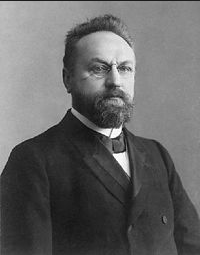
Bavinck dealt at some length with evolution in his Reformed Dogmatics, in an essay on Evolution, and in another essay on Creation or Development and in his Our Reasonable Faith.[1] All of these are available in English. In none of them does he endorse theistic evolution, though he certainly appreciates the way in which God made creatures with the ability to adapt. On the idea that humans have biological ancestry with animals, Bavinck writes,

The descendance theory of Darwin may be an indispensable link in the doctrine of development; it finds no support in facts. Man always has and still does form a distinct species in the world of creatures. For this reason there is still room in science for the wondrously beautiful narrative which the opening chapters of the Bible contain concerning the origin of things . . .

And thus the Scripture states it. In an ascending series, covering a period of six days, by the word of his power the Almighty brings all things to appear from the unseen world of thought . . . What an insight into the origin of things! What an exalted simplicity! Here is poetry and truth and religion all in one. This is both natural science and philosophy (859–60).

After offering extensive critique of evolution for usurping the term development, Bavinck points out that the evolutionary worldview has no purpose of the individual person, for humanity as a whole, or for the earth. In this context he adds a point about the “millions of years,” calling it “child’s play,”

Endless duration together with an endless progress is inconceivable for the earth as well as for man. An end must come. To reckon with millions of years, in the past or in the present, is child’s play and unworthy of mature minds, and is at best of no greater value than the gigantic numbers of Indian mythology. All physicists teach that after some millions of years the earth shall come to an end. However rich in provisions, the earth is not inexhaustible.[2]

James Visscher, in a study on Bavinck on creation, includes part of this quote also, and adds in a note, “[Bavinck] considered the figures coming from geologists to be far-fetched. He had little use for Darwin’s ‘incalculable number of years.’ He stated, ‘As a matter of fact, there are other reasons as well why the human race cannot have existed many thousands of years before Christ.”[3]

Benjamin Warfield, in a review of Bavinck’s essay, spoke with great admiration,

[Bavinck] uncovers with great skill the inconsistencies of the evolutionary philosophy and exposes its vast assumptions; and sets over against it the creationism or supernaturalism of the Biblical world-conception. The address divides itself into three parts, in which are contrasted the two views of the world successively with reference to the questions of the origin, nature, and end of things, the result being to show that the evolutionary scheme stands helplessly before each of the three problems. It is a very thorough and very telling exposure of the essential atheism of evolutionism, considered as a philosophy of being.[4]

Perhaps Warfield was more open to the millions of years hypothesis than was Bavinck, for he doesn’t mention that as part of Bavinck’s critique of evolution as a philosophy of being, he also called its appeal to millions—let alone billions!—of years, “child’s play.”

Klaas Schilder (1890–1952)Screen Shot 2015-11-10 at 1.17.00 AM
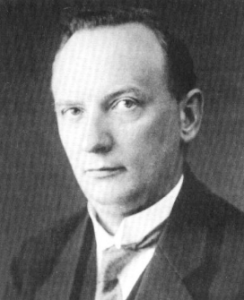
We needn’t comment extensively on Schilder’s views, as Frederika Oosterhoff has already done this work and I haven’t time to pursue this research deeply. However, the comments of Jacob Kamphuis are helpful, in his study on Schilder on heaven. He writes,

Without compromise Schilder makes his starting point the faith in Scripture, specifically in the historical trustworthiness of the history related in Genesis 2 and 3, dealing with the original state of righteousness and the fall into sin. In this book Schilder does not refer even once to the decisions of the Synod of Assen of 1926 [though he had earlier written much about it] regarding the historical trustworthiness of the narrative in Genesis 2 and 3. Nevertheless, Berkhouwer’s words are strikingly applicable to What is Heaven? “I know of no theologian within the circle of Refomred theology for whom the decision of Assen was of more material significance than it was for Schilder.” Schilder reminds us repeatedly of his position, “With resepect to the beginning of the world we must accept the historicity of the narrative of Genesis 1–3.” This is the starting point.[5]

Jack DeJong (1949–)

One of the professors of the Canadian Reformed Theological Seminary, now retired and sadly incapable of entering this debate, commented in Clarion some years ago on the length of the creation days. Like Schilder, whom he studied for his dissertation, DeJong argued that we should not be bound to an exact length of 24 hours for our view of the creation days. Not everyone appreciated his position. However, that he in no way intended to make room for millions of years or for theistic evolution is clear from a brief comment he made in a published work for instruction in pre-confession classes, where he wrote,

The world was created in six days, according to the following pattern . . . [he lists the six days]. The theory of evolution says that all present things evolved from original cells through a process spanning millions of years. Although we cannot deny the process of limited change and micro-evolution, we must rule out the possibility of a change from one species to another (macro-evolution). While we cannot accurately determine the age of the earth, an evolutionary process of billions of years does not accord with the testimony of Genesis 1–3 and its relation to the rest of Scripture.[6]

Conclusion

Let’s not be misled to think that the Reformed theologians here mentioned intended to make room within the Reformed faith for millions or even billions of years of prior existence of the universe, earth, and life. All of them did argue that the days of Genesis 1 (the first three days, or even all six of them) should be called “extraordinary days,” “God’s working days,” and “creation days,” because they thought that these days were not necessarily identical in time with our 24-hour days. But they never suggested that their views allowed room for the deep time advocated by evolutionists.[7]

[1] All of these are easily found, but one: Herman Bavinck, “Creation or Development,” The Methodist Review (1901), transl. Hendrik De Vries, 849–74. See  https://archive.org/details/methodistreview8351unse. Accessed November 9, 2015.

[2] I thank Anthon Souman for drawing this quotation to my attention. I have since noticed that Herman Van Barneveld has also raised it in dialogue with Reformed Academic.

[3] James Visscher, “Bavinck on Creation,” Living Waters from Ancient Springs , ed. Jason Van Vliet (Wipf&Stock, 2011), 145, n. 44.

[4] From the Presbyterian and Reformed Review 12 (1901), 507, as quoted in Eric D. Bristley, Guide to the Writings of Herman Bavinck (RHB, 2008), 75. Checking the original source, I note that Warfield was reviewing the Dutch original, not the translation.

[5] Jacob Kamphuis, “Schilder on Heaven,” Always Obedient, ed. J. Geertsema (P&R, 1995), 102.

[6] Jack DeJong, Credo (Premier Publishing, 1997, etc.), 28–29.

[7] Finally, as a bit of an aside, readers of Reformed Academic’s blogs also repeatedly encounter one or two quotations from John Calvin to the effect that we are to learn astronomy and other disciplines from the scientific experts and not from the Bible. Creation Ministries International replied to this trope some time ago, with a much more wholesome account of Calvin’s views.

Book Review: The Quest for the Historical Adam

HistoricalAdam5__70127.1421354609.1280.1280The Quest for the Historical Adam: Genesis, Hermeneutics, and Human Origins, William VanDoodewaard. Grand Rapids: Reformation Heritage Books, 2015. Hardcover, 400 pages, $37.85.

Once in a very rare while I come across a book which brings me to think, “If I had the means, I would get a copy of this into every single Canadian Reformed home.” This is one of those books. If I couldn’t get it into every single CanRC home, I would settle for getting it into the hands of every single minister, elder, and deacon. The Quest for the Historical Adam is not only relevant, but crucially important for these days in which a biblical view of origins is under pressure. This volume could do a world of good if it would only receive the careful attention it deserves.

The author, William VanDoodewaard, is a church history professor at Puritan Reformed Theological Seminary in Grand Rapids, Michigan. He is also a minister of the Associate Reformed Presbyterian Church (ARP). For those unfamiliar with this church, the ARP is a long-time member of the North American Presbyterian and Reformed Council (NAPARC). Alongside his seminary teaching, Dr. VanDoodewaard is also an ARP church planter in Grand Rapids. Apart from his doctoral dissertation, this is his first published book.

The title of this volume plays off a much earlier book by Albert Schweitzer, The Quest of the Historical Jesus. In that book, Schweitzer examined how historical conceptions of Jesus led to a variety of Jesuses. While his book had some value, unfortunately, Schweitzer did not honour the authority of Scripture, so his conclusions were necessarily flawed. However, VanDoodewaard has the highest view of Scripture as he traces out how people have variously conceived of Adam. The author points that contemporary debates over origins are often afflicted with what he calls “historical amnesia.” This volume seeks to recover our collective memory of how ages past have written about, preached about, and thought about our first parents and their origins.

The first chapter provides a general overview of what Scripture says about Adam. From this overview, the author reaches this conclusion, “…there is no inherent ground to posit anything aside from a special, temporally immediate creation of Adam and Eve as the first humans on the sixth day of creation” (18). The following five chapters trace out the post-biblical history of how Christians have looked at the early chapters of Genesis. If anything is clear from these chapters, it is that there has been a consensus view for millennia. The consensus is that the first chapters of Genesis must be taken seriously as a historical record. When it comes to human origins, the vast majority of Christian interpreters have understood Scripture to teach a special or immediate creation of Adam and Eve, a creation which allows for no prior biological ancestry of any sort. The Quest for the Historical Adam concludes with a chapter entitled, “What Difference Does It Make?” In this chapter, the author lays out ten areas of doctrine that are affected by how one views the origin of Adam. What are those ten areas?

  1. Scripture and hermeneutics
  2. Man and the ethics of human life
  3. Marriage and unity of race
  4. Human language
  5. God, the Creator
  6. The goodness of creation
  7. In Adam’s fall sinned we all?
  8. Christ as Creator and Redeemer
  9. Adam, Christ, and the Covenants
  10. Adam and accountability: the last things

Dr. VanDoodewaard convincingly makes the case that no one can soundly argue that one’s view of origins can be hermetically sealed off from the rest of one’s theology. Even taking an agnostic view or allowing for latitude in the matter will invariably have some impact.

The heart of the book is the historical overview. Let me mention five highlights that are worth sharing. There are many more highlights that I could mention, but I hope these five will whet your appetite and motivate you to buy the book.

Today we sometimes encounter the idea of pre-Adamites – human beings or human-like creatures (hominids) who lived before and beside Adam. One of the first to promote a form of this idea was a Frenchman named Isaac La Peyrère (1596-1676). While he worked with the text of Genesis in his book Men Before Adam, he did so in a rather revisionist way. He argued that only the Jews were descended from Adam and Genesis 2 only described where the Jews came from. Everyone else came from other groups of human beings who had existed long before Adam. What motivated La Peyrère to develop this theory? He wanted to make Genesis more reasonable so that unbelievers would be more receptive to the Christian faith (143). Does this sound familiar?

La Peyrère developed a small following in Europe. His ideas were widely discussed, but uniformly rejected by Reformed theologians. His ideas were also rejected by Roman Catholic figures such as Blaise Pascal (1623-1662). Following what Scripture taught on this matter, Pascal held to a young earth of about 6000 years age and “was also explicitly critical of pre-Adamite thought” (122).

Another valuable contribution of VanDoodewaard is his critique of historian Ronald Numbers. Numbers wrote an influential 1992 book entitled The Creationists in which he argued that a literal understanding of the early chapters of Genesis only exists in our modern day because of the influence of American creation scientists, and particularly through the writing of a Seventh Day Adventist, George McCready Price. “However,” writes VanDoodewaard, “more thorough scholarship reveals significant evidence of a strong stream of both nineteenth- and twentieth-century sources that remained firmly in the millennia old tradition of a literal hermeneutic” (157). What Numbers and others have failed to see is that, entirely apart from twentieth-century creation science, theologians and clergymen have for centuries maintained a literal reading of Genesis, reaching their conclusions based on the text alone. Our author gives several good examples with Dutch-American Reformed theologians like Geerhardus Vos, William Heyns, Foppe Ten Hoor, and Louis Berkhof.

An important part of the work of a historian is discerning patterns. The Quest for the Historical Adam reveals an important pattern in thinking about origins. It starts with sources outside of Scripture and Christian theology pressuring an alternative explanation – these sources could be philosophical, scientific, literary, or archaeological. Under that pressure, interpreters begin to make allowances for alternative explanations. Other generations eventually arise which take things a step further and assert these alternative explanations more stridently, also following through on their logical consequences. This pattern is evident throughout the book.

As mentioned earlier, Dr. VanDoodewaard is an Associate Reformed Presbyterian minister. It is not surprising then to find his church and its struggles with this question mentioned. He notes that the ARP adopted a synodical teaching statement in 2012 that affirmed the clear biblical teaching on origins. He contrasts that with the Presbyterian Church in America (PCA). He notes that efforts were made to have the PCA clearly rule out aberrant teachings on origins. A 2012 effort to have the PCA General Assembly issue a teaching statement on this matter floundered. Why? There was a convergence of two broad camps. VanDoodewaard writes:

Some argued that the confessional standards of the Westminster Confession of Faith and Catechisms provided sufficient clarity on the topic – positing that if there were concerns, they ought to be pursued through the means of church discipline. Other delegates held that belief in evolutionary biological processes in human origins, as circumscribed by Collins, Keller, or others, was harmonious with Scripture and represented a legitimate latitude of ecclesiastical theology (248).

These two lines of argument paralyzed the PCA and prevented it from taking a stand. The result is that various forms of theistic evolution continue to have a comfortable home in the PCA and very little, if anything, can be done about it. Will we in the Canadian Reformed Churches learn from this history while the opportunity is still there?

Obviously, I have a great deal of appreciation for this book. However, there are a couple of oversights that I noticed. Chapter 3 deals with “Adam in the Reformation and Post-Reformation Eras.” While the author does spend some time with the Westminster Standards (especially the issue of “in the space of six days”), he disregards the Three Forms of Unity or other Reformed confessions. This is important in our day when we hear it asserted by some that theistic evolution falls within the bounds of our confessions. Nevertheless, VanDoodewaard’s research certainly does support the position that in the era in which these confessions were originally written, it would have been unthinkable for forms of theistic evolution to be tolerated in Reformed churches. Chapter 6 deals with the 1950s to the present. The author has some discussion about developments in the Christian Reformed Church, but there could have been more said. For instance, it would be helpful for readers to see how the tolerance of theistic evolution in the CRC grew out of a weakened view of biblical authority starting in the 1950s, especially under the influence of the Free University of Amsterdam.

The Quest for the Historical Adam is a unique contribution to a vitally important topic. It might be a bit technical at times for some readers, but those who persevere will be rewarded. As intimated in my introduction, this is especially an important book for office bearers. As those who have promised to “oppose, refute, and help prevent” errors conflicting with God’s Word, we need to educate ourselves about those errors and the patterns that lead to them being accepted. This is all the more case when an error is right before us, threatening to undo us. I heartily commend Dr. VanDoodewaard for writing this valuable book and Reformation Heritage Books for publishing it. May the day hasten when historians look back and say that the publication of this book was a turning point for the maintenance of orthodoxy on origins!


This review was originally published in Reformed Perspective magazine and reappears here with their gracious permission.

It’s all in the definition

Reblogged from Keep Ablaze, the website of Pastor Rob Schouten

A person mentioned in an overture recently adopted by Classis Ontario West feels that he has been grossly misrepresented in this decision. I am genuinely open to that possibility but so far have not been convinced. Central to this feeling of being misrepresented is the question of the meaning of “theistic evolution.” One of the persons mentioned in this overture states forcefully that he is not a “theistic evolutionist.” While there is no universally accepted definition of theistic evolution, here are a couple from credible Christian proponents of this idea:

  • “Theistic evolution is the proposition that God is in charge of the biological process called evolution. God directs and guides the unfolding of life forms over millions of years. Theistic evolution contends that there is no conflict between science and the Biblical book of Genesis.”
  • “The dictionaries I checked don’t define the term, “theistic evolution,” so I offer my own definition: the belief that God used the process of evolution to create living things, including humans.”

I think the above definitions capture what most people mean by “theistic evolution.” The main idea is that evolution is God’s way of creating new life forms in the history of the world. Typically, theistic evolution advocates acknowledge that God directly created some original form of life and also that at some point in history, God created human beings by placing his image upon some pre-existing creature.

Do we have reason to think that the persons mentioned in the overture of Classis Ontario West embrace or want to make room for theistic evolution as a way of understanding the origin of species, including homo sapiens?

First of all, should it be difficult to ascertain a person’s belief in this regard? I have read a lot over the years in relation to this topic and it’s usually not hard to figure out an author’s orientation.

Secondly, have the persons in question sufficiently profiled themselves for readers to formulate an opinion about their orientation and direction in regard to the issue of evolution? I think they have. In their writings at Reformed Academic and elsewhere, these men have indicated that evolution is, at the very least, a highly credible theory that deserves the utmost respect from all serious-minded people. It’s just as credible as the prevailing theory of gravity, one of them writes.

A reader would therefore be within his rights to consider that these brothers accept  that life probably began about 4 billion years ago and from that point developed through mutations and natural selection into the millions of species we see on planet earth today. At the same time, they are members of Christian churches which confess “I believe in God the Father Almighty, Maker of heaven and earth.”

In short, evolution happened and yet God created. Putting those two ideas together in the same mind and on the same page understandably leads readers to the term “theistic evolution.” This is a term with a considerable history and has been freely used by Christian scholars who seem to have the same view of creation as do the brothers mentioned in this overture. Is it slander to use this term in regard to these men? I don’t think that would be a fair ethical assessment of the overture adopted in Classis Ontario West.

Naturally, the next big question is: what about human beings? Are we also the result of a process of evolution? Are we biologically related to prehistoric hominoids and presently-living primates? Do Adam and Eve have a pre-history? Like many other proponents of theistic evolution, the brothers mentioned in the overture adopted by Classis Ontario West clearly and repeatedly affirm that human beings are the result of a special act of creation by God.

I’m very happy for that affirmation. However, the questions remain: did God create Adam as Genesis records that he did? Did God make Adam from the “dust of the ground,” that is, from inanimate matter?  To ask the same question differently, was Adam biologically related to pre-existing creatures? Was he made directly or was he born from pre-existing hominoids only to be subsequently and supernaturally endowed with the image of God? Was Eve made directly form his side? Are Adam and Eve the ancestors of all presently living human beings?

If those who are named in the overture of Classis Ontario West seek to dissociate themselves from the label “theistic evolution” and thus quell the sort of concerns evident in this overture, they could do so quite readily by answering questions such as these, as they have been invited to do in another blog by a concerned and well-informed author.