Keller: Can we take Genesis 1 literally, if we hold that God used evolution to create?

As I explained in the last blog entry, Keller entertains the real questions Christians ask when they are told that biological evolution is compatible with the Bible. The first “layperson” question considered by Keller is, “If God used evolution to create, then we can’t take Genesis 1 literally, and if we can’t do that, why take any other part of the Bible literally?” Keller’s short answer is, “The way to respect the authority of the Biblical writers is to take them as they want to be taken. Sometimes they want to be taken literally, sometimes they don’t. We must listen to them, not impose our thinking or agenda on them.”

At first glance this is a solid answer—the Bible has authority! But I’ll have more to say about that below.

Genre and intent

Keller expands upon his answer first by delving into the genre of Genesis 1 because “the way to discern how an author wants to be read is to distinguish what genre the writer is using” (3). “How an author wants to be read” is a bit ambiguous, but I’ll take it to refer to authorial intent (Keller’s point is going to be whether or not the author wants us to read Genesis 1 literally and chronologically). The link he proposes between genre and authorial intent, however, is not straightforward. Consider this example: If I use poetry to communicate to my wife how much I love her, my intentions are just the same as if I had written it out prosaically. Even if I used a syllogism, “All my life I have loved you; today is a day of my life; therefore I love you today,” my intentions would still be the same (though she’d call it a silly-gism). It’s true that in poetry I’m more likely to use figures of speech but those as such don’t remove historicity from the poetry. See Psalm 78 for a good example of poetry replete with historical truth.

Genre of Genesis 1

Keller next asks what genre Genesis 1 is and starts his answer with the conservative Presbyterian theologian Edward J. Young (1907–1968) who, he says, “admits that Genesis 1 is written in ‘exalted, semi-poetical language.’” Keller correctly notes the absence of the telltale signs of Hebrew poetry. Yet he also points out the refrains in Genesis 1 such as, “and God saw that it was good,” “God said,” “let there be,” and “and it was so,” and then adds, “Obviously, this is not the way someone writes in response to a simple request to tell what happened” (4). He completes this part of the arguments with a quotation from John Collins that the genre of Genesis 1 is “what we may call exalted prose narrative . . . by calling it exalted, we are recognizing that we must not impose a ‘literalistic’ hermeneutic on the text” (4). Thus this argument is now complete: the genre of Genesis 1 prohibits us from reading it literally.

Screen Shot 2016-03-07 at 5.06.26 AM.png

Misleading appeal to E. J. Young

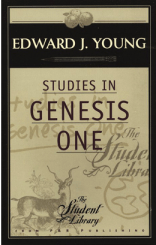
However, if we follow the trail via Keller’s footnote to E. J. Young’s, Studies in Genesis One, we discover that Keller sidestepped Young’s real point. Here’s the fuller quote, “Genesis one is written in exalted, semi-poetical language; nevertheless, it is not poetry” (italics added). Young continued by pointing out what elements of Hebrew poetry are lacking and by urging the reader to compare Job 38:8–11 and Psalm 104:5–9 to Genesis 1 in order to see the obvious differences between a poetic and non-poetic account of the creation. Prior to this paragraph Young had written,

Genesis one is a document sui generis [entirely of its own kind]; its like or equal is not to be found anywhere in the literature of antiquity. And the reason for this is obvious. Genesis one is divine revelation to man concerning the creation of heaven and earth. It does not contain the cosmology of the Hebrews or of Moses. Whatever that cosmology may have been, we do not know . . . Israel, however, was favoured of God in that he gave to her a revelation concerning the creation of heaven and earth, and Genesis one is that revelation (82).

 In note 80 of the same page Young elaborates further,

For this reason we cannot properly speak of the literary genre of Genesis one. It is not a cosmogony, as though it were simply one among many. In the nature of the case a true cosmogony must be a divine revelation. The so-called cosmogonies of the various peoples of antiquity are in reality deformations of the originally revealed truth of creation. There is only one genuine cosmogony, namely, Genesis one, and this account alone gives reliable information as to the origin of the earth (82n80).
Screen Shot 2016-03-07 at 5.09.15 AM.png

With these words of Young guiding our hearts, we turn back to Keller’s statement that it is “obvious” that someone would not compose an account in the exalted style of Genesis 1 “in response to a simple request to tell what happened.” But what if the things therein described happened exactly in that exalted way? Of course we are reading “exalted prose”—precisely because the things described are so wonderful! The literary style not only fits but even reflects the miraculous events. God is glorified repeatedly, all the more because it is literally true.

An old canard: Genesis 1 versus Genesis 2

Keller’s second reason—and strongest, he says—why he thinks the author of Genesis 1 didn’t want to be taken literally is based on “a comparison of the order of creative acts in Genesis 1 and Genesis 2” (4). This argument is a bit more complicated and deserves closer scrutiny than I will give it here. But the basic point is that Genesis 2:5 apparently speaks about God not putting any vegetation on the earth before there was an atmosphere or rain or a man to till the ground. This, says Keller, is the natural order. Genesis 1 is the unnatural order, so it’s not literal. His argument is an old canard, but really it is a lame duck.

Screen Shot 2016-03-07 at 5.21.27 AM.png

Let’s examine it: Keller says that Genesis 1 has an unnatural order because light (day 1) came before light sources (day 4) and vegetation (day 3) came before an atmosphere and rain (day 4). However, he reads the text too quickly here, for the separation of waters above and below occurs on day 2, allowing rain before vegetation. On day 4 God set the light sources in the firmament that was already there on day 2. Further, the old light vs light bearers problem is far from sufficient to jettison the chronological order of the creation events in Genesis 1. And, finally, a normal day without light or water wouldn’t kill these plants anyway.

To continue: the order of events in Genesis 2, especially verse 5, is not in the least contrary to Genesis 1. Rather, whereas Genesis 1:1–2:3 refers only to “God” and focuses on the awesome Creator preparing and adorning the earth for man, Genesis 2:4–25 focus on this God as “Yahweh” who lovingly and tenderly creates the man and the woman, prepares a beautiful garden for them, and who thereupon enters into a loving relationship with them. Each chapter makes its own contribution to the story, with chapter 2 doubling back in order to more fully explain the events of the sixth day. This is a common occurrence in Hebrew prose. Further, we can easily fit 2:4–25 chronologically in between 1:26, “Let us make man in our image” and 1:27, “So God created man in his image . . . male [Adam] and female [Eve] he created them.”

Screen Shot 2016-03-07 at 5.14.16 AM.png

Finally, Genesis 2:4 begins the first “toledoth” or “generations of” statement, which after this becomes a structural divider in Genesis, occurring nine more times. Young argues that we should translate “toledoth” as “those things which are begotten” (59). If we follow this suggestion, we see that Genesis 2:4ff tell us about the things begotten of the heavens and the earth, such as the man, who is both earthly (his body) and heavenly (his spirit), or the garden, which is earthly, yet planted by God. When Genesis 2:5 states that “no shrub of the field” had yet grown and “no plant of the field” had yet sprouted, it portrays a barrenness which sets the stage for the fruitful garden (2:8–14) and the fruitful wife (2:18–25). Further, the “shrubs” and “plants” of the field likely point to cultivated plants that require human tending. Adam will be a farmer. If so, the point of 2:5 is not the lack of vegetation altogether, but the lack of certain man-tended kinds, such as those Yahweh God would plant in the Garden of Eden.

Therefore, we ought to conclude the very opposite of Keller. Whereas he argues that we cannot read both chapter 1 and chapter 2 as “straightforward accounts of historical events” and that chapter 2 rather than chapter 1 provides the “natural order” (5), we most certainly can read both as historical and literal.

Keller pulls together both the genre and the chronology arguments and concludes,

So what does this mean? It means Genesis 1 does not teach us that God made the world in six twenty-four hour days. Of course, it doesn’t teach evolution either . . . However, it does not preclude the possibility of the earth being extremely old (5).

However, both of Keller’s grounds for not taking Genesis 1 literally have been exposed as weak at best.[1] In contrast, E. J. Young’s strong arguments for the literal, historical reading of Genesis 1, a few of which we reviewed here, remain firmly in place. Exalted prose indeed, and true!

Whose authority?

Finally, a word about the authority of the text: Keller states that we must “respect the authority of the Biblical writers.” His wording is similar to John Walton’s in his speeches at a conference I attended in September 2015.[2] Walton frequently spoke of “the authority of the text” and stated that it rested in the original meaning “as understood by the people who first received it.” But missing from both Keller and Walton is the recognition that all Scripture is breathed by God (2 Tim 3:16) and that therefore the primary author is the Holy Spirit (2 Pet 1:21). We are not called just to respect the authority of human writers or of the text, but of God himself! There are passages of Scripture for which the first intention of the human writer—as far as we can discern it—does not reach as far as the divine intention (for example, certain Messianic Psalms such as 2 & 110, or the injunction about the ox not wearing a muzzle as it treads out the grain (Deut 25:4; cf. 1 Cor 9:9; 1 Tim 5:18). In fact, Peter tells us that the Old Testament prophets searched with great care to find out the time and circumstances of the things they prophesied about Christ—implying that the prophecies went beyond the knowledge of the prophets themselves. He adds that these are things into which even angels long to look (1 Pet 1:10–12). Thus, it’s clear that the primary author of Scripture is the Holy Spirit and that the authority of the text resides in his intentions first of all. This is why one of the primary rules of interpretation is to compare Scripture with Scripture. This book alone is God’s Word!

Let us take great care in handling the Word of God, greater care than Keller does on this point. And let us conclude that the text of Genesis 1 itself clearly indicates it is to be read literally, historically, and chronologically (Keller, at least, has not proven otherwise).

[1] In addition, Keller’s note 17 on page 14, linked to a different section of his paper, asserts that prose can use figurative speech and poetry can use literal speech. It appears, then, that he undercuts his own argument.

[2] See my blog entry at https://creationwithoutcompromise.com/2016/02/03/the-lost-world/.

Keller’s advice to fellow Biologos members

Screen Shot 2016-03-02 at 7.02.16 AM

A theological orthodoxy as well-aligned as that of Timothy Keller is hard to find among the increasing numbers of scientists, theologians, and organizations currently urging evangelical Christians to accept biological evolution. He is the pastor of New York’s Redeemer Presbyterian Church (PCA) and is well-known through his writings on apologetics, church planting, and preaching. His 13 page white paper, hosted by Biologos and entitled “Creation, Evolution, and Christian Laypeople,” has been referenced favourably by scientists and theologians in conservative Reformed churches.[1] For example, when Frieda Oosterhoff introduced Keller’s paper some years ago on the Reformed Academic website, she stated,

(Readers of this blog, incidentally, will notice that our blog partner Dr. Jitse van der Meer sees eye to eye with Dr. Kidner in the matter of human evolution, the historicity of Adam and Eve, and the descent of all humans from Adam, and that he affirms the same tentative approach as Kidner and Keller.)[2]

In his paper Keller entertains the real questions of concerned Christians and offers answers as to how to help them integrate evolution with their faith. We have intended to interact with his arguments for some time.

Screen Shot 2016-03-02 at 6.57.28 AM

It’s important to situate accurately our debate with Keller. The debate between us is not whether the Christian faith and current science (or what is claimed to be science) are irreconcilable, for we all agree that in many respects they are reconcilable while in some respects they are not. The debate, rather, is in what particular respects they are and are not able to be reconciled.

The debate between us is not whether evolution is a defensible worldview that gives us the basis of our views on religion, ethics, human nature, etc. We all agree that it is not the “grand theory/explanation of everything.” We all agree that there is a God and he is the God of the Bible—Triune, sovereign, covenant-making, gracious, atonement-providing, and bringing about a new creation. Nor am I debating whether Keller is an old-earth creationist aka progressive creationist or an evolutionary creationist or a theistic evolutionist. His own position is a bit unclear so I will simply deal with what he has published in this paper.[3]

The debate between us is not whether matter is eternal; whether the universe’s order is by sheer chance; whether humans have no purpose but to propagate their own genes; whether humans are material only; whether human life is no more valuable than bovine, canine, or any other life; whether upon death all personal existence ceases; or whether ethics is at root about the survival of the fittest. We all agree that none of these things are the case—Scripture teaches differently. We are not debating these points.

Our differences emerge in the compatibility of Scripture with biological evolution, namely, whether Scripture has room for the view that humans—insofar as they are material beings—have a biological ancestry that precedes Adam and Eve. Is this a permissible view?

The first thing to realize as one reads Keller’s paper is its context and purpose: Delivered at the first Biologos “Theology of Celebration” workshop in 2009, Keller lays out 3 (at first 4) concerns that “Christian laypeople” typically express when they are told that God created Adam and Eve by evolutionary biological processes. Keller advances strategies to help fellow Biologos members allay these fears of Christian laypeople. The context thus is that biological evolution is a permissible view; the scholars just need to figure out how to make it more widely accepted.

Screen Shot 2016-03-02 at 6.55.08 AM

Keller deals with the following “three questions of Christian laypeople.”

  1. If God used evolution to create, then we can’t take Genesis 1 literally, and if we can’t do that, why take any other part of the Bible literally?
  2. If biological evolution is true—does that mean that we are just animals driven by our genes and everything about us can be explained by natural selection?
  3. If biological evolution is true and there was no historical Adam and Eve how can we know where sin and suffering came from?

These are excellent questions! Keller provides summary answers and longer explanations for each question. His short answers to the first two questions seem solid enough on the surface of things, yet his longer explanations deserve careful examination. His short answer to the third question is something we have directly contested on creationwithoutcompromise.com more than once, from the standpoint of Scripture. Here are his three summary answers. You can correlate them with the questions above.

  1. The way to respect the authority of the Biblical writers is to take them as they want to be taken. Sometimes they want to be taken literally, sometimes they don’t. We must listen to them, not impose our thinking or agenda on them.
  2. Belief in evolution as a biological process is not the same as belief in evolution as a world-view.
  3. Belief in evolution can be compatible with a belief in an historical fall and a literal Adam and Eve. There are many unanswered questions around this issue and so Christians who believe God used evolution must be open to one another’s views.

With this introduction in place, we can now interact with Keller’s advice to his fellow Biologos members in his longer explanations of each of these summary answers.

[1] Keller’s paper can be found online at http://biologos.org/blogs/archive/series/creation-evolution-and-christian-laypeople. Accessed 22 Feb 2016.

[2] See http://reformedacademic.blogspot.ca/2010/03/tim-keller-on-evolution-and-bible.html. Accessed 27 Feb 2016.

[3] For this debate see https://adaughterofthereformation.wordpress.com/2012/04/04/is-dr-tim-keller-a-progressive-creationist/. Accessed 27 Feb 2016.

Who Misunderstands Evolution?

I was recently made aware of an excellent Internet resource that I had not come across before – Creation/Evolution Headlines, the website of David Coppedge. David Coppedge is a former employee at NASA’s Jet Propulsion Laboratory. His website is an excellent resource for keeping up with current issues regarding, as its title says, creation and evolution.

I would like to direct you to one article in particular which I found to be particularly helpful: Who Misunderstands Evolution? In this article, Coppedge examines an evolutionist’s explanation as to why large numbers of people continue to not accept evolution as a reasonable explanation for the origin of the world as we know it – and finds that explanation more than just a little wanting.

In previous articles here, we’ve explained some logical fallacies employed by theistic evolutionists in their argumentation. In the article linked above, Coppedge’s explanation of the logical fallacies involved in the evolutionist’s argumentation is thorough and insightful. He has also produced a timely resource for an era in which logic is often poorly understood and under-utilized: the  “Baloney Detector” (Coppedge has a tendency to call a spade a spade). Here he lists the various kinds of logical fallacies and poor argumentation that are often employed in the context of many different arguments, as well as how they can be tackled.


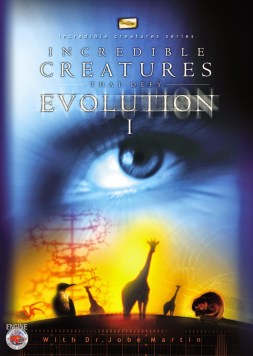
DOCUMENTARY REVIEW: Incredible Creatures that defy Evolution I

creatures2bthat2bdefy2bevolutionDocumentary
47 min / 2006
Rating: 8/10

As narrator Dr. Jobe Martin explains to us, he was once an evolutionist. He became a creationist when, as a professor at a dental college, he gave a lecture on the evolution of the tooth – teaching that fish scales eventually migrated into the mouth and became teeth – and was challenged by a couple of his students to investigate creation science. He’d never heard of it, but was willing to take a look. And the closer he looked the more he realized that much of the evolution he believed in was based on assumptions.

His study led him to investigate animals and other creatures, and in this short documentary he shares with us some of the most incredible features of some pretty incredible creatures that forced him to acknowledge that there was a Master Designer behind all this. For example, did you know:

  • …the bombardier beetle repels attackers by shooting a fiery liquid out of its rear end?
  • …the giraffe’s heart is strong enough to pump blood all the way up to its head? But what happens when it lowers that head to take a drink? The same strong stream of oxygenated blood will now be traveling with enough pressure to blow out its brain…except for the shut off valves in its neck that kick in when it dips its head.
  • …the woodpecker has a barbed gluey tongue that sticks to bugs but doesn’t stick to its own beak? And it has a skull that is designed to do the work of a jackhammer without giving the poor fellow a headache.

Dr. Martin shows us why we should be amazed by many other creatures including: the beaver, the Australian incubator bird, the platypus, the chicken egg, the chuckwalla lizard, the gecko, and us humans.

My preschool daughters were amazed, and while this is a video primarily intended for children, my wife and I were also engaged. We were floored by just how creative God is. It is good family viewing, with enough pictures and film footage to keep the attention of the very young, and for parents, a narrative that highlights just God’s sense of fun and genius.

This might not be a good one to hand to any hardened evolution-believing folk you might know. It is just a children’s video – it isn’t meant to offer an overly detailed or complete argument against evolution, and hardened critics will seize on that lack of depth to dismiss it entirely.

So get it for your own family, or your Christian school. And if you know someone dead-set on evolution, then consider Evolution’s Achilles’ Heels and its more adult anti-evolutionary argument. I review it here.

I should add that there are two more films in this series, all of them quite good, and this one the very best of the bunch. You can buy it by clicking here or rent it online by clicking here. And for a four minute peek, check out the trailer below.

This review originally appeared on ReelConservative.com.

A Dangerous Direction

BeekeA few months ago, we included a review of a book edited by Richard D. Phillips, God, Adam, and YouYou can find Dr. Van Raalte’s review here.  I’ve had the book for a while, but have only just begun reading it myself.  So far, it definitely lives to up to what was said in the review.

I’d like to share an excerpt from chapter 2, “The Case For Adam.”  Dr. Joel Beeke presents ten persuasive historical and theological arguments in favour of the orthodox view of Adam.  His final theological argument is that “the historical Adam is a test case for biblical authority.”  He specifically critiques scholars like Peter Enns who argue that God “‘adopted mythic categories’ from the ancient world, myths that we may now discard, so long as we retain the kernel of truth they contain.”

Beeke goes on to remark:

Those who take this route perhaps may not realize that they are departing from the path of biblical orthodoxy and following the same road as unbiblical neoorthodoxy.  Emil Brunner (1889-1966), a prominent neoorthodox theologian, said that the Bible’s teaching on creation is “not a theory of the way in which the world came into existence,” but only a summons to know God as your Lord and Creator.  Thus, he said, the Adam of Genesis 2 is inseparable from ancient beliefs about the universe and cannot be viewed as a real individual in light of our modern understanding.  For Brunner, Paradise was a “myth” not “historical fact.”

It is not necessary for us to go in this direction.  Why couldn’t the ancient Hebrews have understood it if God had told them that he created by a long, slow process of evolutionary change?  Every day, as they planted and harvested crops or worked with sheep and cattle, they could see change and improvement in the various seeds they planted or the animals they bred.  Why couldn’t God effectively communicate to them that he had conferred a human soul upon an existing animal rather than breathed life into a body formed directly out of the earth?  Why not reveal in Genesis that God made many human beings at first, instead of just one?  Why would these things have been harder for them to accept than the idea that there is only one true and living God, given that all their neighbors worshiped many gods?  And why must we separate the way in which God created from the fact that he is Creator?  Does it not glorify God as Lord to know that he created man, not through any natural process, but by a supernatural act of creation?  Yes, the account of the historical Adam’s creation greatly honors God as Creator and Lord.

Furthermore, this is a dangerous direction to go.  If the Bible is a mixture of cultural dressing wrapped around divine truth, then how can we be sure which part is the husk and which is the kernel?  What one generation embraces as the kernel of divine truth could very well be rejected by another generation as merely more human culture and tradition.  We see this happening around us even now with respect to the definition of marriage and homosexuality.  (pages 38-40)

Beeke is spot on.  Indeed, theistic evolutionary views can only gain acceptance as believers succumb to lower views of the Bible.  Such views typically over-emphasize the human element behind the authorship of Scripture and under-emphasize the divine.  We should never forget the Reformed (and biblical) teaching that the primary author of Scripture is the Holy Spirit.  And yes, “primary” is the right word.  The Bible is not 50% human and 50% divine.  It is first and foremost the Word of God.  It has come to us through human involvement, but it remains entirely 100% the word of our Father in heaven.  The more clearly we see that, the better equipped we are to stand fast against false teachings like theistic evolution.