DOCUMENTARY REVIEW: Mount St. Helens: Modern Day Evidence for the World Wide Flood

Documentarydvd1
2012 / 36 minutes
Rating: 7/10

Thirty-four years ago Washington State’s Mount St. Helens blew its top. The eruption on the morning of May 18, 1980, knocked 1,300 feet off the top of the mountain, sending a massive landslide down its slope, clearing out a forest of trees, and washing out the lake at its base. For nine straight hours it put out the energy equivalent of about one Hiroshima-type atomic bomb every second.

The sheer power of this eruption makes it interesting, but this event is of particular interest to creation scientists like Dr. Steve Austin. The eruption scoured the area clean, but also lay down layers and layers of rock strata from the volcanic ash. The eruption also caused the creation of deep, new, instantaneous canyons, that – if we didn’t know better – looked to be many thousands of years old.

In other words, the Mount St. Helens eruptions showed that catastrophic events can rapidly create huge geological features. Dr. Austin shows how this has implications for the Flood, showing how it too could have rapidly laid down many layers of rock strata, and carved out even huge features, like the Grand Canyon. Just because its massive does not mean it took long to form!

I gave this a 7/10 rating, because it is well done, but I do want to note that if you aren’t already interested in this subject matter, this isn’t the sort of documentary that will just grab you. There is clearly a professional behind the camera, but overall the visuals are pretty tame (no computer graphics and no visualization of the actual eruption). So this is one you get for the fascinating information.

The DVD can be ordered at AnswersInGenesis.org and Creation.com or at FloodGeologySeries.com.

This post was originally published on www.ReelConservative.com.

Creation Chronology in 1 Corinthians 11

Over the past week, a large percentage of my time was spent poring over the first sixteen verses of 1 Corinthians 11, and writing what wound up being two sermons on this passage. It’s a tough passage – “one of the most difficult and controversial passages in the Bible,” according to Thomas Schreiner, and a passage which “continues to vex modern interpreters,” as David Garland writes. The passage deals with the issue of head-coverings for women, and over the centuries, even interpreters who work within the same theological framework have argued strongly in favour of contradictory conclusions.

Given the focus of our website, the topic of this post will not be whether or not the Apostle Paul’s instruction concerning head-coverings is still applicable today, or, if so, how it is to be applied. I’ll save that stuff for the sermons. Instead, I’m going to focus on one aspect of Paul’s argument in support of his teaching, found in verses 7 through 12:

“For a man ought not to cover his head, since he is the image and glory of God, but woman is the glory of man. For man was not made from woman, but woman from man. Neither was man created for woman, but woman for man. That is why a wife ought to have a symbol of authority on her head, because of the angels. Nevertheless, in the Lord woman is not independent of man nor man of woman; for as woman was made from man, so man is now born of woman. And all things are from God” (ESV).

Richard Hays, in his commentary on this passage, writes that Paul’s “reasoning is notoriously obscure – partly because we don’t know precisely how to interpret some of the key terms in the argument, and partly because the line of argument is – by any standard – laboured and convoluted.” I beg to differ (strongly) with Hays’ conclusion, but regardless of the difficulties we may have with Paul’s argument as modern interpreters, one thing is absolutely clear: Paul grounds his argument in the Genesis creation account.

It has been argued that the Genesis account of creation was not meant to be a chronological account of God’s work of creating the universe. Rather, some will argue, we are not to read into the text an insistence on a specific chronology – a definite order of events that must be understood as historical narrative, in the way that we generally understand historical narrative to work. Instead, it is argued, we should accept that the Genesis creation account is poetic in nature, and that it was meant to teach us important lessons about who God is, about his power, majesty and glory, about our humble origins, without insisting that the account’s chronology must be taken at face value.

So when we do insist that there is a specific order to creation, a certain chronology of events, with light being created before the light-bearers, with the birds and sea creatures being created one day prior to the land animals and human beings, we’re told by some that we are imposing a modern view of history on the account. This, it is said, is something that earlier interpreters of the text, working within a different cultural and intellectual framework, would not have done.

But my question is this: is that really an accurate assessment? How does Paul, writing under the inspiration of the Holy Spirit, but within his own historical, cultural, and intellectual context, understand the story of creation recorded in Genesis 1 and 2? As people who believe in the unity of Scripture, and that the ultimate source of Scripture is God himself, we should strive to interpret Scripture with Scripture. So, if we want to learn how to rightly interpret Genesis 1 and 2, one of the most important tasks at hand is to see what it says about these chapters elsewhere in Scripture.

And Paul makes several statements that rely on the chronological accuracy of the Genesis account:

1. Man was not made from woman, but woman from man.
2. Man was not created for woman, but woman for man.
3. As woman was made from man, so man is now born of woman.

Because of these facts, Paul writes, “woman is the glory of man.” Why? Because woman was made from man, and created for man. His argument rests on the order of events as outlined in the creation account in Genesis 2, which focuses on the creation of human beings:

Genesis 2:7 – “Then the LORD God formed the man of dust from the ground and breathed into his nostrils the breath of life, and the man became a living creature.”

Genesis 2:18 – “Then the LORD God said, ‘It is not good that the man should be alone; I will make him a helper fit for him.’”

Genesis 2:21-23 – “So the LORD God caused a deep sleep to fall upon the man, and while he slept took one of his ribs and closed up its place with flesh. And the rib that the LORD God had taken from the man he made into a woman and brought her to the man. Then the man said, ‘This at last is bone of my bones and flesh of my flesh; she shall be called Woman, because she was taken out of Man.’”

It seems clear that Paul accepted the historical reality of all of these events. Adam was created first. Adam was charged with the job of naming the animals, but in the course of that activity, it became apparent that none of these creatures was a suitable helper for him. So God subsequently created a helper who was suited to him: the woman. He caused Adam to fall into a deep sleep, removed one of his ribs, and from that rib he formed the woman.

Now, it could be claimed (as some do) that Paul was a product of his times. He came to his patriarchal and misogynistic conclusion because he was a man firmly rooted in First Century Judaism, living in the Roman Empire. He believed this account of creation, and took it literally, because his understanding on these matters was limited. We have more information available to us, so we must read the creation story, as well as Paul’s instructions to the church in Corinth, in a way that takes that new information into account.

But as people who believe in the inspiration, authority, and perfection of Holy Scripture, these options are simply not open to us. Paul’s first letter to the Corinthians is God’s Word, a part of that Scripture. There are indeed, as Peter writes in 2 Peter 3:16, “some things in them that are hard to understand, which the ignorant and unstable twist to their own destruction, as they do the other Scriptures,” but that only means we may have to work harder to understand them, because they are Scripture. Paul’s interpretation of Genesis 1 and 2 is not an interpretation that we can reject if we want to continue to submit ourselves to all of God’s Word. It is, simply put, absolutely authoritative.

And that leads us to these conclusions:

1. If Paul reads the Genesis creation account as an actual chronology of events, so should we.
2. If Paul says that the first woman was created out of the first man, we should accept that fact.
3. If Paul says that the woman was created for the man, that must be true.

At the same time, we must also categorically reject the belief that Adam and Eve were descended from other hominids, and may have been the first creatures endowed with the “image of God,” but were not immediately created by God, using, in the first place, the dust of the earth, and in the second place, a rib from the man. If the first man were born of a woman, either human or hominid, and if the first woman were physically born as the result of human or hominid procreation, Paul’s argument is invalid. It simply does not hold water. If Paul’s argument is invalid, Scripture does not stand. If Scripture does not stand, our faith collapses with it. That is how serious this discussion is.

Note well: this line of reasoning does not depend on an individual’s understanding of the actual genre of the Genesis creation account. It may be argued (incorrectly, I believe) that Genesis 1-3 are poetic in nature, and thus should not be understood as an account of consecutively occurring events. But it simply cannot be argued that Paul’s use of the Genesis creation account (along with several other passages in Scripture) is meant to be taken in that way.

In subsequent posts, I hope to examine other passages, in the Old and New Testaments, that use the Genesis creation account in similar ways. My goal is that we take the complete message of Scripture as a unity. It is the Word of truth, God’s perfect revelation. That’s where our starting point must be.

Documentary review: LIVING WATERS

Documentary
69 minutes / 2015
Rating 8/10

This is one part nature documentary and one part evolutionary takedown. Illustra Media understand that a great way to expose evolution is to take a close in-depth look at some of the creatures that God has made. In Darwin’s day scientists didn’t have the ability to look inside the cell, and only had a glimmering of how incredibly complex even the simplest living creatures are. Now we know so much more – it turns out that even the simplest cell in our body has astonishingly complex and coordinated inner workings. Some have compared the complexity of a cell to the complexity of an entire city! In other words, the more we know, the more apparent it is that evolution can’t be so.

In previous films Illustra Media took a close look at butterflies (Metamorphosis) and birds (Flight). This time they have turned their attention to four maritime creatures: dolphins, sea turtles, pacific salmon, and humpback whales.

Time doesn’t allow a full detailing of just how awe-inspiring this investigation is. But I’ll give you a small sampling of what the documentary shares about the complexity of dolphins. These creatures can distinguish between a ping pong ball and a golf ball via echo-location. This is a form of sonar, and better than anything man has ever constructed. The dolphin’s sonar system can spot fish up to six inches under the sand and can find a BB at the bottom of a swimming pool.

Dolphins also have a complex air return system which allows them to make the high frequency sounds they need for echo location by blowing air past two sets of “phonic lips” and then recoup that air and redirect it back to its lungs. This air return system allows it re-use this air and to echo locate for more than ten minutes without needing to surface for air.

This is only scratching the surface of the dolphin’s complexity but this is already enough to expose the impossibility of evolution. The dolphin is able to:

  • make the sonic sound
  • focus and direct it
  • receive it
  • and, finally, have the ability to interpret and understand the signal they are getting back

All four of these elements are needed or else the system won’t work at all. So how could evolution – random mutation and natural selection – be responsible? The idea that all four elements evolved to be at the very same time is beyond fantastic. So too is the idea that they would evolve one after another and be selected for, despite having no function (despite having no evolutionary advantage) until all four are finally developed and the whole system is up and running. Evolution simply can’t account for systems such as this, which are so obviously and clearly designed.

Living waters is a remarkable documentary with wonderful visuals of all the creatures discussed. My pre-school children weren’t able to follow the discussion, but the close-up videos and computer animations kept their attention. Meanwhile their mom and I were stunned by the sheer brilliance and creativity of God!

I should add that while mention is made of an Intelligent Designer, He is never specifically named as the God of the Bible. That is disappointing, but every Christian watching this will most certainly give God glory. I can’t recommend it enough – this is a amazing look at some seemingly simple but incredibly complex creatures.

This review was originally published on www.reelconservative.com.

Extraordinary days = support for theistic evolution?

Quote 1:

As I have pointed out some years ago, there is a striking difference on the interpretation of Genesis 1 between these North-American Reformed theologians and their Dutch colleagues – such as Kuyper, Bavinck, Honig, Aalders, Schilder . . . Are we in danger of forgetting our own Reformed tradition in favour of the American one – both in the interpretation of Genesis 1 and in the inerrancy issue?

Quote 2:

Theistic evolution is not outside the bounds of the Three Forms of Unity.

Comment on quotes 1 & 2: Anyone reading the first quotation on a website that includes the second quotation can be forgiven for thinking (incorrectly) that the theologians here named supported some version of theistic evolution. Arguing towards the thesis of quote two in fact provides the raison d’être for the Reformed Academic blog, from where these quotes are drawn.

Quote 3:

This [the global flood] is a major argument in supporting its [creation science’s] belief that the earth is quite young — some 6,000 to 10,000 years in age, rather than the billions of years acknowledged by most scientists. According to creation-science most of the geological features of the entire earth have been shaped by a global Noahic flood which took place some 5,000 years ago.

Quote 4:

With respect to the results of modern science regarding so-called “origins” questions, we do acknowledge that there are multiple converging lines of evidence in favour of an ancient cosmos and even for the common ancestry of all living things. Now, especially in the latter case we do not consider this evidence to be incontrovertible proof, and we certainly believe God did something special in creating humankind.

Quote 5:

This includes especially the field of paleontology (studying the fossil record, including the use of radioactivity and geology) as well as astronomy, astrophysics, and cosmology (these deal with stars and galaxies whose light often takes many years to reach us). These are the disciplines, after all, which have been marshalling the evidence that life has been around for about ¾ of the earth’s 4.54-billion-year history, and that the universe itself is about 13.75 billion years old. And these ages are supposed to contradict a “plain sense” or “traditional” reading of Scripture.

Comment on quotes 3, 4, and 5: Two choices are placed before the reader: either 6,000 to 10,000 years of age for the earth [and universe, I might add], or 13.75 billion years for the universe, 4.54 billion for the earth, and about 3 point something billion years for life on earth. Note: to make the contrast clear, I added the italics to these quotations from the Reformed Academic website.

My concern: For several years, as part of their argument that Reformed Christians need to make room for theistic evolution, Reformed Academic has been appealing to some key continental Reformed theologians—as listed above, Kuyper, Bavinck, Honig, Aalders, and Schilder—and their views on the length of the creation days in Genesis 1. Of course none of the authors at Reformed Academic have argued that these theologians supported theistic evolution as such. In one place, they even correctly state the opposite. Nevertheless, my concern is that by way of repeated rhetorical appeal to the latitude of these men regarding “Genesis 1”—and by using “Genesis 1” as shorthand for their views on the length of the days in Genesis 1—Reformed Academic leaves the impression that they can claim the support of these earlier theologians. I assert that these men neither supported theistic evolution, nor tolerated the deep time required for the supposed evolutionary process—the millions, let alone billions of years of the universe and the earth. Nor should we.

We can all point to a number of theologians who argued that some or all of the days of Genesis 1 were “extraordinary” in length, or that they were “God’s working days,” and “creation days.” Both Max Rogland (2001) and Frederika Oosterhoff (2003) have proved the case for this, and shown that Bavinck, Schilder, and others used primarily exegetical points from Genesis 1 to argue against being bound to the 24-hour view. But the fuller picture requires a more robust affirmation of their adherence to the literal, historical, common-sense reading of Genesis 1. I will explore only two of these figures, Bavinck and Schilder, and I shall follow them up with a quotation from one of the former professors of the Canadian Reformed Theological Seminary on the same point.

Herman Bavinck (1854–1921)Screen Shot 2015-11-10 at 1.17.35 AM
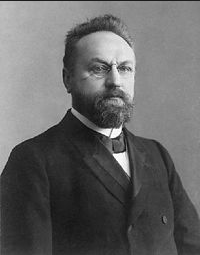
Bavinck dealt at some length with evolution in his Reformed Dogmatics, in an essay on Evolution, and in another essay on Creation or Development and in his Our Reasonable Faith.[1] All of these are available in English. In none of them does he endorse theistic evolution, though he certainly appreciates the way in which God made creatures with the ability to adapt. On the idea that humans have biological ancestry with animals, Bavinck writes,

The descendance theory of Darwin may be an indispensable link in the doctrine of development; it finds no support in facts. Man always has and still does form a distinct species in the world of creatures. For this reason there is still room in science for the wondrously beautiful narrative which the opening chapters of the Bible contain concerning the origin of things . . .

And thus the Scripture states it. In an ascending series, covering a period of six days, by the word of his power the Almighty brings all things to appear from the unseen world of thought . . . What an insight into the origin of things! What an exalted simplicity! Here is poetry and truth and religion all in one. This is both natural science and philosophy (859–60).

After offering extensive critique of evolution for usurping the term development, Bavinck points out that the evolutionary worldview has no purpose of the individual person, for humanity as a whole, or for the earth. In this context he adds a point about the “millions of years,” calling it “child’s play,”

Endless duration together with an endless progress is inconceivable for the earth as well as for man. An end must come. To reckon with millions of years, in the past or in the present, is child’s play and unworthy of mature minds, and is at best of no greater value than the gigantic numbers of Indian mythology. All physicists teach that after some millions of years the earth shall come to an end. However rich in provisions, the earth is not inexhaustible.[2]

James Visscher, in a study on Bavinck on creation, includes part of this quote also, and adds in a note, “[Bavinck] considered the figures coming from geologists to be far-fetched. He had little use for Darwin’s ‘incalculable number of years.’ He stated, ‘As a matter of fact, there are other reasons as well why the human race cannot have existed many thousands of years before Christ.”[3]

Benjamin Warfield, in a review of Bavinck’s essay, spoke with great admiration,

[Bavinck] uncovers with great skill the inconsistencies of the evolutionary philosophy and exposes its vast assumptions; and sets over against it the creationism or supernaturalism of the Biblical world-conception. The address divides itself into three parts, in which are contrasted the two views of the world successively with reference to the questions of the origin, nature, and end of things, the result being to show that the evolutionary scheme stands helplessly before each of the three problems. It is a very thorough and very telling exposure of the essential atheism of evolutionism, considered as a philosophy of being.[4]

Perhaps Warfield was more open to the millions of years hypothesis than was Bavinck, for he doesn’t mention that as part of Bavinck’s critique of evolution as a philosophy of being, he also called its appeal to millions—let alone billions!—of years, “child’s play.”

Klaas Schilder (1890–1952)Screen Shot 2015-11-10 at 1.17.00 AM
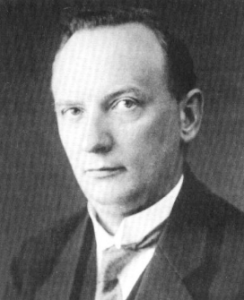
We needn’t comment extensively on Schilder’s views, as Frederika Oosterhoff has already done this work and I haven’t time to pursue this research deeply. However, the comments of Jacob Kamphuis are helpful, in his study on Schilder on heaven. He writes,

Without compromise Schilder makes his starting point the faith in Scripture, specifically in the historical trustworthiness of the history related in Genesis 2 and 3, dealing with the original state of righteousness and the fall into sin. In this book Schilder does not refer even once to the decisions of the Synod of Assen of 1926 [though he had earlier written much about it] regarding the historical trustworthiness of the narrative in Genesis 2 and 3. Nevertheless, Berkhouwer’s words are strikingly applicable to What is Heaven? “I know of no theologian within the circle of Refomred theology for whom the decision of Assen was of more material significance than it was for Schilder.” Schilder reminds us repeatedly of his position, “With resepect to the beginning of the world we must accept the historicity of the narrative of Genesis 1–3.” This is the starting point.[5]

Jack DeJong (1949–)

One of the professors of the Canadian Reformed Theological Seminary, now retired and sadly incapable of entering this debate, commented in Clarion some years ago on the length of the creation days. Like Schilder, whom he studied for his dissertation, DeJong argued that we should not be bound to an exact length of 24 hours for our view of the creation days. Not everyone appreciated his position. However, that he in no way intended to make room for millions of years or for theistic evolution is clear from a brief comment he made in a published work for instruction in pre-confession classes, where he wrote,

The world was created in six days, according to the following pattern . . . [he lists the six days]. The theory of evolution says that all present things evolved from original cells through a process spanning millions of years. Although we cannot deny the process of limited change and micro-evolution, we must rule out the possibility of a change from one species to another (macro-evolution). While we cannot accurately determine the age of the earth, an evolutionary process of billions of years does not accord with the testimony of Genesis 1–3 and its relation to the rest of Scripture.[6]

Conclusion

Let’s not be misled to think that the Reformed theologians here mentioned intended to make room within the Reformed faith for millions or even billions of years of prior existence of the universe, earth, and life. All of them did argue that the days of Genesis 1 (the first three days, or even all six of them) should be called “extraordinary days,” “God’s working days,” and “creation days,” because they thought that these days were not necessarily identical in time with our 24-hour days. But they never suggested that their views allowed room for the deep time advocated by evolutionists.[7]

[1] All of these are easily found, but one: Herman Bavinck, “Creation or Development,” The Methodist Review (1901), transl. Hendrik De Vries, 849–74. See  https://archive.org/details/methodistreview8351unse. Accessed November 9, 2015.

[2] I thank Anthon Souman for drawing this quotation to my attention. I have since noticed that Herman Van Barneveld has also raised it in dialogue with Reformed Academic.

[3] James Visscher, “Bavinck on Creation,” Living Waters from Ancient Springs , ed. Jason Van Vliet (Wipf&Stock, 2011), 145, n. 44.

[4] From the Presbyterian and Reformed Review 12 (1901), 507, as quoted in Eric D. Bristley, Guide to the Writings of Herman Bavinck (RHB, 2008), 75. Checking the original source, I note that Warfield was reviewing the Dutch original, not the translation.

[5] Jacob Kamphuis, “Schilder on Heaven,” Always Obedient, ed. J. Geertsema (P&R, 1995), 102.

[6] Jack DeJong, Credo (Premier Publishing, 1997, etc.), 28–29.

[7] Finally, as a bit of an aside, readers of Reformed Academic’s blogs also repeatedly encounter one or two quotations from John Calvin to the effect that we are to learn astronomy and other disciplines from the scientific experts and not from the Bible. Creation Ministries International replied to this trope some time ago, with a much more wholesome account of Calvin’s views.

Book Review: The Quest for the Historical Adam

HistoricalAdam5__70127.1421354609.1280.1280The Quest for the Historical Adam: Genesis, Hermeneutics, and Human Origins, William VanDoodewaard. Grand Rapids: Reformation Heritage Books, 2015. Hardcover, 400 pages, $37.85.

Once in a very rare while I come across a book which brings me to think, “If I had the means, I would get a copy of this into every single Canadian Reformed home.” This is one of those books. If I couldn’t get it into every single CanRC home, I would settle for getting it into the hands of every single minister, elder, and deacon. The Quest for the Historical Adam is not only relevant, but crucially important for these days in which a biblical view of origins is under pressure. This volume could do a world of good if it would only receive the careful attention it deserves.

The author, William VanDoodewaard, is a church history professor at Puritan Reformed Theological Seminary in Grand Rapids, Michigan. He is also a minister of the Associate Reformed Presbyterian Church (ARP). For those unfamiliar with this church, the ARP is a long-time member of the North American Presbyterian and Reformed Council (NAPARC). Alongside his seminary teaching, Dr. VanDoodewaard is also an ARP church planter in Grand Rapids. Apart from his doctoral dissertation, this is his first published book.

The title of this volume plays off a much earlier book by Albert Schweitzer, The Quest of the Historical Jesus. In that book, Schweitzer examined how historical conceptions of Jesus led to a variety of Jesuses. While his book had some value, unfortunately, Schweitzer did not honour the authority of Scripture, so his conclusions were necessarily flawed. However, VanDoodewaard has the highest view of Scripture as he traces out how people have variously conceived of Adam. The author points that contemporary debates over origins are often afflicted with what he calls “historical amnesia.” This volume seeks to recover our collective memory of how ages past have written about, preached about, and thought about our first parents and their origins.

The first chapter provides a general overview of what Scripture says about Adam. From this overview, the author reaches this conclusion, “…there is no inherent ground to posit anything aside from a special, temporally immediate creation of Adam and Eve as the first humans on the sixth day of creation” (18). The following five chapters trace out the post-biblical history of how Christians have looked at the early chapters of Genesis. If anything is clear from these chapters, it is that there has been a consensus view for millennia. The consensus is that the first chapters of Genesis must be taken seriously as a historical record. When it comes to human origins, the vast majority of Christian interpreters have understood Scripture to teach a special or immediate creation of Adam and Eve, a creation which allows for no prior biological ancestry of any sort. The Quest for the Historical Adam concludes with a chapter entitled, “What Difference Does It Make?” In this chapter, the author lays out ten areas of doctrine that are affected by how one views the origin of Adam. What are those ten areas?

  1. Scripture and hermeneutics
  2. Man and the ethics of human life
  3. Marriage and unity of race
  4. Human language
  5. God, the Creator
  6. The goodness of creation
  7. In Adam’s fall sinned we all?
  8. Christ as Creator and Redeemer
  9. Adam, Christ, and the Covenants
  10. Adam and accountability: the last things

Dr. VanDoodewaard convincingly makes the case that no one can soundly argue that one’s view of origins can be hermetically sealed off from the rest of one’s theology. Even taking an agnostic view or allowing for latitude in the matter will invariably have some impact.

The heart of the book is the historical overview. Let me mention five highlights that are worth sharing. There are many more highlights that I could mention, but I hope these five will whet your appetite and motivate you to buy the book.

Today we sometimes encounter the idea of pre-Adamites – human beings or human-like creatures (hominids) who lived before and beside Adam. One of the first to promote a form of this idea was a Frenchman named Isaac La Peyrère (1596-1676). While he worked with the text of Genesis in his book Men Before Adam, he did so in a rather revisionist way. He argued that only the Jews were descended from Adam and Genesis 2 only described where the Jews came from. Everyone else came from other groups of human beings who had existed long before Adam. What motivated La Peyrère to develop this theory? He wanted to make Genesis more reasonable so that unbelievers would be more receptive to the Christian faith (143). Does this sound familiar?

La Peyrère developed a small following in Europe. His ideas were widely discussed, but uniformly rejected by Reformed theologians. His ideas were also rejected by Roman Catholic figures such as Blaise Pascal (1623-1662). Following what Scripture taught on this matter, Pascal held to a young earth of about 6000 years age and “was also explicitly critical of pre-Adamite thought” (122).

Another valuable contribution of VanDoodewaard is his critique of historian Ronald Numbers. Numbers wrote an influential 1992 book entitled The Creationists in which he argued that a literal understanding of the early chapters of Genesis only exists in our modern day because of the influence of American creation scientists, and particularly through the writing of a Seventh Day Adventist, George McCready Price. “However,” writes VanDoodewaard, “more thorough scholarship reveals significant evidence of a strong stream of both nineteenth- and twentieth-century sources that remained firmly in the millennia old tradition of a literal hermeneutic” (157). What Numbers and others have failed to see is that, entirely apart from twentieth-century creation science, theologians and clergymen have for centuries maintained a literal reading of Genesis, reaching their conclusions based on the text alone. Our author gives several good examples with Dutch-American Reformed theologians like Geerhardus Vos, William Heyns, Foppe Ten Hoor, and Louis Berkhof.

An important part of the work of a historian is discerning patterns. The Quest for the Historical Adam reveals an important pattern in thinking about origins. It starts with sources outside of Scripture and Christian theology pressuring an alternative explanation – these sources could be philosophical, scientific, literary, or archaeological. Under that pressure, interpreters begin to make allowances for alternative explanations. Other generations eventually arise which take things a step further and assert these alternative explanations more stridently, also following through on their logical consequences. This pattern is evident throughout the book.

As mentioned earlier, Dr. VanDoodewaard is an Associate Reformed Presbyterian minister. It is not surprising then to find his church and its struggles with this question mentioned. He notes that the ARP adopted a synodical teaching statement in 2012 that affirmed the clear biblical teaching on origins. He contrasts that with the Presbyterian Church in America (PCA). He notes that efforts were made to have the PCA clearly rule out aberrant teachings on origins. A 2012 effort to have the PCA General Assembly issue a teaching statement on this matter floundered. Why? There was a convergence of two broad camps. VanDoodewaard writes:

Some argued that the confessional standards of the Westminster Confession of Faith and Catechisms provided sufficient clarity on the topic – positing that if there were concerns, they ought to be pursued through the means of church discipline. Other delegates held that belief in evolutionary biological processes in human origins, as circumscribed by Collins, Keller, or others, was harmonious with Scripture and represented a legitimate latitude of ecclesiastical theology (248).

These two lines of argument paralyzed the PCA and prevented it from taking a stand. The result is that various forms of theistic evolution continue to have a comfortable home in the PCA and very little, if anything, can be done about it. Will we in the Canadian Reformed Churches learn from this history while the opportunity is still there?

Obviously, I have a great deal of appreciation for this book. However, there are a couple of oversights that I noticed. Chapter 3 deals with “Adam in the Reformation and Post-Reformation Eras.” While the author does spend some time with the Westminster Standards (especially the issue of “in the space of six days”), he disregards the Three Forms of Unity or other Reformed confessions. This is important in our day when we hear it asserted by some that theistic evolution falls within the bounds of our confessions. Nevertheless, VanDoodewaard’s research certainly does support the position that in the era in which these confessions were originally written, it would have been unthinkable for forms of theistic evolution to be tolerated in Reformed churches. Chapter 6 deals with the 1950s to the present. The author has some discussion about developments in the Christian Reformed Church, but there could have been more said. For instance, it would be helpful for readers to see how the tolerance of theistic evolution in the CRC grew out of a weakened view of biblical authority starting in the 1950s, especially under the influence of the Free University of Amsterdam.

The Quest for the Historical Adam is a unique contribution to a vitally important topic. It might be a bit technical at times for some readers, but those who persevere will be rewarded. As intimated in my introduction, this is especially an important book for office bearers. As those who have promised to “oppose, refute, and help prevent” errors conflicting with God’s Word, we need to educate ourselves about those errors and the patterns that lead to them being accepted. This is all the more case when an error is right before us, threatening to undo us. I heartily commend Dr. VanDoodewaard for writing this valuable book and Reformation Heritage Books for publishing it. May the day hasten when historians look back and say that the publication of this book was a turning point for the maintenance of orthodoxy on origins!


This review was originally published in Reformed Perspective magazine and reappears here with their gracious permission.